

In Japan, one food sparks more debate than any other: Natto. People either love it or hate it. There is no middle ground. Japanese people eat natto as a healthy breakfast almost every day. Foreign tourists, however, often call it “the weirdest and most disgusting food in Japan.” Natto (納豆) starts as soybeans. Bacteria called Bacillus subtilis then change these beans through fermentation. This process creates a sticky, stringy texture. The dish also has a strong smell, similar to aged cheese or ammonia. Its flavor is savory, slightly bitter, and leaves a nutty aftertaste.
People have eaten natto in Japan for over 1,000 years. This tradition dates back to the Heian period (794-1185 AD). Today, the average Japanese person eats natto 2-3 times per week. There are several varieties. For example, Kotsubu Natto uses small soybeans and is most common. Hikiwari Natto has crushed soybeans with a smoother texture. Meanwhile, Miso Natto comes mixed with miso for a saltier taste.
One pack of natto contains 7-8 grams of protein and only 90-100 calories. Furthermore, natto is the only food in the world that contains nattokinase. This enzyme can dissolve blood clots and lower blood pressure. Additionally, it provides rich amounts of vitamin K2, which supports bone health.
If you’re interested in other Japanese fermented foods, try shiokara (fermented seafood) or fugu (deadly pufferfish).
Want to learn more about Japanese fermented foods? Read National Geographic’s article on Japanese fermentation or explore BBC’s feature on natto.
💡 Key Insight: Here’s the secret to enjoying natto for the first time: do not smell it first. Mix it with rice immediately and chew. The umami flavor will dominate, not the aroma.
How to Eat Natto (Step by Step)
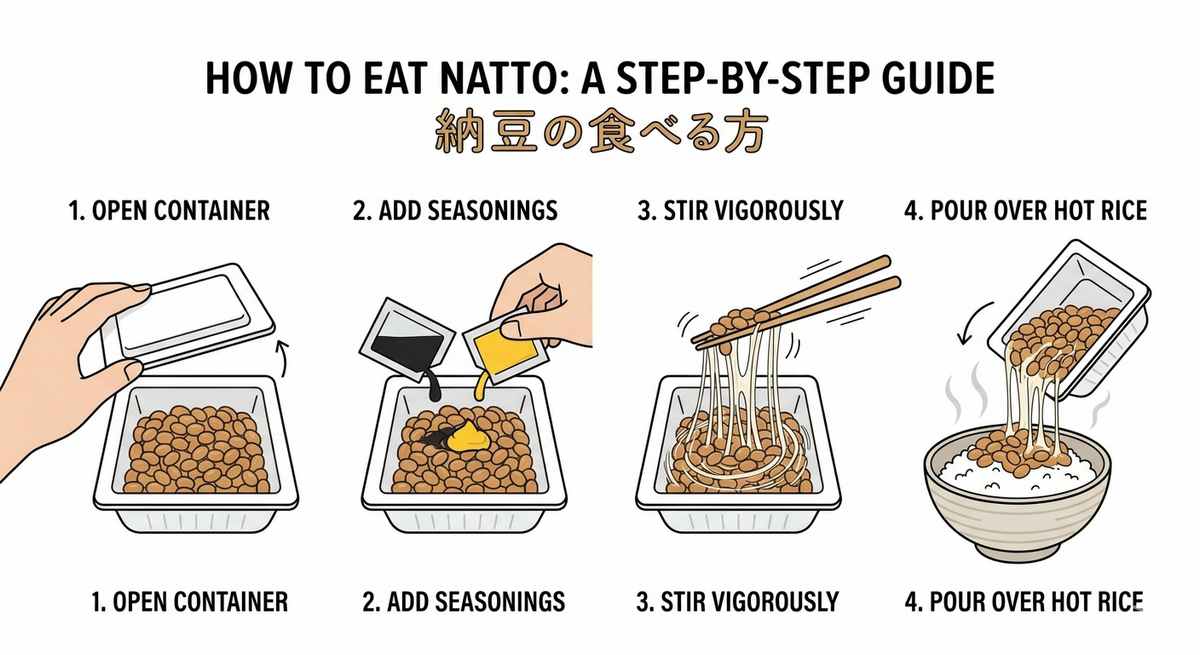
Follow these simple steps to enjoy natto:
- Step 1: First, buy natto at a supermarket. Look for it in the refrigerated section. A pack costs about ¥50–100.
- Step 2: Next, open the package. Inside, you’ll find the soybeans, a soy sauce packet (called tare), and Japanese mustard (karashi).
- Step 3: Then, add the sauce and mustard to the soybeans.
- Step 4: After that, stir vigorously with chopsticks for 30-60 seconds until long sticky threads form.
- Step 5: Finally, serve the natto over a bowl of warm white rice. The heat from the rice helps reduce the strong aroma. For beginners, add chopped green onions, nori (seaweed), or a raw egg yolk to make the taste milder.
For other Japanese breakfast foods, read about traditional Japanese breakfast.
Where to Try Natto in Tokyo
Tsukiji Outer Market: Here you can find natto maki (natto rolls). These rolls are perfect for beginners because the seaweed and rice balance the strong flavor.
Coco Ichibanya: Try the natto curry rice. The strong curry flavor helps mask the natto taste, making it easier for first-timers.
Any supermarket (Don Quijote, 7-Eleven, FamilyMart): This is the cheapest option. A full breakfast costs only about ¥200.
Natto Kitchen in Shibuya: This specialty restaurant serves natto in over 20 different ways. For example, you can try natto pasta, natto tempura, or even natto cheesecake.
Street vendor selling fresh natto maki rolls at Tsukiji Outer Market, Tokyo — perfect for beginners.
For more information on fermented foods and gut health, check out WHO’s food safety guidelines.
Key Takeaways:
• Natto is made from soybeans fermented with Bacillus subtilis bacteria — expect a sticky, stringy texture and strong aroma (similar to aged cheese)
• The flavor is savory (umami), slightly bitter, with a nutty aftertaste — many people describe it as an acquired taste
• Health benefits include nattokinase (which may help with blood clots), vitamin K2 (for bone health), probiotics, and high protein content
• How to eat: stir vigorously for 30-60 seconds, then serve over warm rice with soy sauce, mustard, and green onions
• Where to try: Tsukiji Outer Market (natto maki), Coco Ichibanya (natto curry), or any supermarket
• Price range: ¥50–100 per pack ($0.35–$0.70 USD) at supermarkets
Ready to Try Japan’s Most Polarizing Food?
Follow EatSleepPush for more extreme food guides from around the world.