

Basashi — raw horse meat sashimi — is one of Japan’s most surprising food treasures. This dish comes from Kumamoto Prefecture. It might sound scary at first. But it offers a mild, sweet flavor and a melt-in-your-mouth texture. In fact, this delicacy rivals the finest tuna sashimi. People also call it “sakura niku” (cherry blossom meat) because of its pinkish-red color. Moreover, basashi is high in protein and iron, and it has less fat than beef.
First, the flavor is mild, slightly sweet, and clean. It tastes much less gamey than you might expect. Second, the texture is very tender with streaked fat that melts easily. Restaurants typically serve basashi with freshly sliced garlic, ginger, soy sauce, and finely shredded green onions.
Here’s the classic way to enjoy it: dip a thin slice in soy sauce, then top it with garlic and ginger. Finally, savor the burst of matching flavors. For those interested in other Japanese dishes, try fugu (deadly pufferfish) or natto (fermented soybeans).
Want to learn more about Japanese raw dishes? Read National Geographic’s article on Japanese food culture or explore BBC’s feature on basashi.
💡 Key Insight: Here’s how locals enjoy basashi: dip a thin slice in soy sauce, then add garlic and ginger on top. Savor the burst of these matching flavors together.
Where to Eat Basashi in Tokyo
- Umaya (Shibuya): This modern izakaya offers a basashi tasting platter for ¥3,000–¥5,000.
- Basashi no Uma (Shinjuku): You’ll find authentic Kumamoto-style basashi with premium sakura niku for ¥4,000–¥6,000.
- Yakiniku Jumbo (Roppongi): For a high-end dining experience, expect to pay ¥8,000–¥12,000.
- Sakura Tei (Asakusa): This casual, tourist-friendly spot offers basashi for ¥2,500–¥4,000.
Where to Eat Basashi in Kyoto and Kumamoto
Kyoto: Gion Kitagawa in the Gion district serves basashi in a traditional atmosphere. Prices range from ¥6,000–¥10,000. For a quick casual tasting, visit the Nishiki Market stalls. A single serving costs only ¥500–¥1,500.
Kumamoto (The Birthplace): Suganoya in Kumamoto City is the most famous basashi specialist. This restaurant has over 100 years of history. Prices range from ¥4,000–¥7,000. Alternatively, try Yokobachi, a local izakaya, for ¥3,000–¥5,000.
For other Japanese raw dishes, read about sannakji (live octopus) in South Korea.
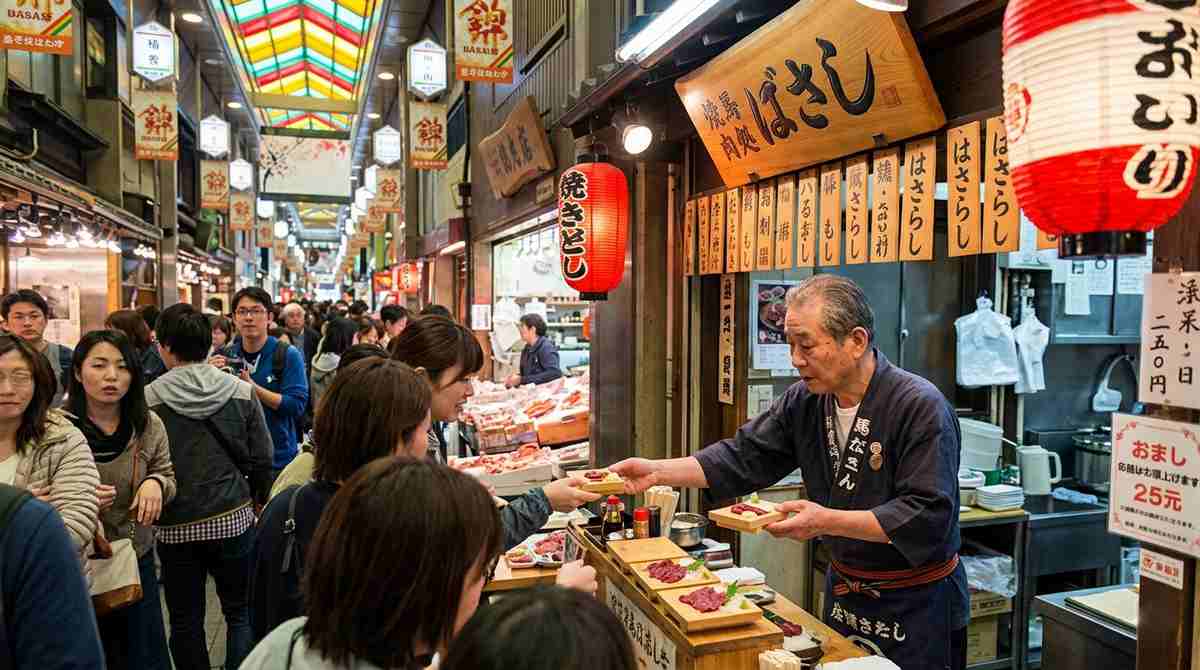
Basashi being sold by the slice at Nishiki Market, Kyoto — perfect for a quick tasting.
How to Eat Basashi Like a Local
- Step 1: First, dip lightly — don’t drown the meat in soy sauce.
- Step 2: Next, add toppings: place a slice of garlic and a pinch of ginger on top.
- Step 3: Then, eat it in one bite — basashi comes in thin slices meant for single bites.
- Step 4: Finally, pair it with sake or shochu. The mild sweetness of basashi pairs perfectly with Japanese spirits.
Is Basashi Safe to Eat?
Yes, basashi is safe to eat. Japan enforces strict food safety rules for basashi. Farmers breed horses specifically for human consumption. Butchers also process the meat under clean conditions — similar to how they prepare fish sashimi. However, always eat at trusted restaurants. Look for those displaying “Kumamoto basashi” certification to ensure quality.
What to Order Alongside Basashi
- Horse meat tataki (lightly seared with ponzu sauce)
- Horse meat hot pot (basashi nabe)
- Horse meat sausage
- Sakura yukke (Korean-style raw horse meat)
For more information on food safety and raw meat consumption, check out WHO’s food safety guidelines.
Key Takeaways:
• Basashi is raw horse meat sashimi — people also call it “sakura niku” (cherry blossom meat)
• The flavor is mild, slightly sweet, and clean — not gamey at all. The texture is tender with streaked fat
• Restaurants serve it with garlic, ginger, soy sauce, and green onions
• Best places to try: Suganoya in Kumamoto (most famous), Umaya in Tokyo, Nishiki Market in Kyoto
• Price range: ¥1,500–¥3,000 at casual restaurants; ¥5,000–¥10,000 for premium sets
• Japan has strict safety rules — only eat at trusted restaurants with certification
Ready to Try Japan’s Cherry Blossom Meat?
Follow EatSleepPush for more extreme food guides from around the world.