

Buddha’s Hand (Citrus medica var. sarcodactylis) is one of China’s most captivating fruits. With its finger-like tendrils, intense floral-lemony fragrance, and deep cultural significance as a symbol of good fortune and longevity, it’s no wonder travelers, Feng Shui enthusiasts, and culinary adventurers seek it out. Unlike most citrus fruits, Buddha’s Hand contains no pulp or juice — it’s all fragrant rind and pith, perfect for zesting, candying, and infusing.
Buddha’s Hand symbolizes happiness, longevity, and good fortune. In Feng Shui, it’s displayed during Lunar New Year to attract prosperity. In Traditional Chinese Medicine (TCM), it’s used to soothe the liver, relieve stomach issues, and reduce phlegm. The fruit has a sweet, complex floral-lemony scent that perfumes an entire room. Peak season is November through February, especially leading up to Chinese New Year (January–February). Price ranges from ¥30–¥150 per fruit depending on location and quality.
For those interested in other Chinese fruits and foods, try century egg (pídàn) or durian, the King of Fruits.
Want to learn more about Chinese cultural fruits? Read National Geographic’s article on Chinese fruit symbolism or explore BBC’s feature on Buddha’s Hand.
Key Insight: Unlike most citrus fruits, Buddha’s Hand contains no pulp or juice — it’s all fragrant rind and pith. This makes it perfect for zesting, candying, and infusing.
Where to Buy Buddha’s Hand in China
Beijing: Xinfadi Wholesale Market (Fengtai District) — bulk purchases, lowest prices, ¥30–¥80 per fruit. Sanlitun Market (Chaoyang District) — tourist-friendly, English-speaking vendors, ¥60–¥120.
Shanghai: Xietu Road Fruit Market (Huangpu District) — fresh produce specialists, ¥40–¥100. City Shop (multiple locations) — high-end grocery, gift-ready packaging, ¥90–¥180. Yuyuan Garden Market (Old City) — tourist experience, ¥50–¥120.
Guangzhou: Jiangnan Fruit Wholesale Market (Haizhou District) — largest fruit market in South China, ¥25–¥60 per fruit.
Best time: November–February (peak season before Lunar New Year).
For other unique Chinese products, read about Tong Zi Dan (virgin boy eggs).
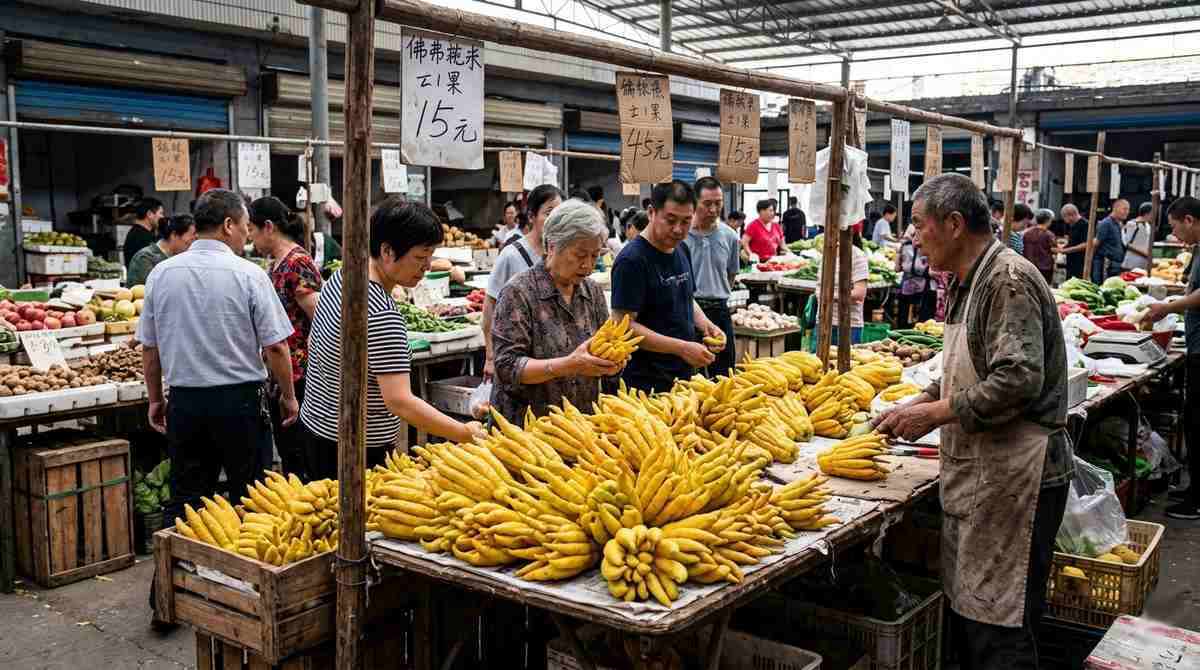
Fresh Buddha’s Hand fruit at a traditional market in Beijing — available during peak season November through February.
How to Choose and Use Buddha’s Hand
How to choose: Bright vibrant yellow color (not green or brown). Heavy for its size (indicates thick, moist rind). Firm to touch with no soft spots. Strong sweet floral-citrus aroma. Intact fingers (not broken or dried out).
5 popular ways to use: Feng Shui display — place in a bowl on altar or entryway for good fortune. Candied Buddha’s Hand — traditional Chinese New Year treat (blanch, simmer in simple syrup 1-2 hours, dry, coat in sugar). Buddha’s Hand infused alcohol — steep zest in baijiu, vodka, or gin for 2-4 weeks. Dried Buddha’s Hand tea — steep dried slices for soothing, aromatic TCM tea. Natural air freshener — place fresh fruit in a bowl; perfumes room for 1-2 weeks.
For more information on exotic fruits and food safety, check out WHO’s food safety guidelines.
Key Takeaways:
• Buddha’s Hand is a fragrant citrus fruit with finger-like segments — symbolizes good fortune
• Contains no pulp or juice — all fragrant rind and pith for zesting, candying, infusing
• Peak season: November–February (especially before Lunar New Year)
• Price: ¥30–¥150 per fruit ($4–$20 USD) depending on location and quality
• Best markets: Xinfadi (Beijing), Xietu Road (Shanghai), Jiangnan (Guangzhou)
• Cannot bring fresh fruit internationally — buy dried, candied, or essential oil instead
Ready to Bring Good Fortune Home?
Follow EatSleepPush for more exotic fruit and food guides from around the world.