
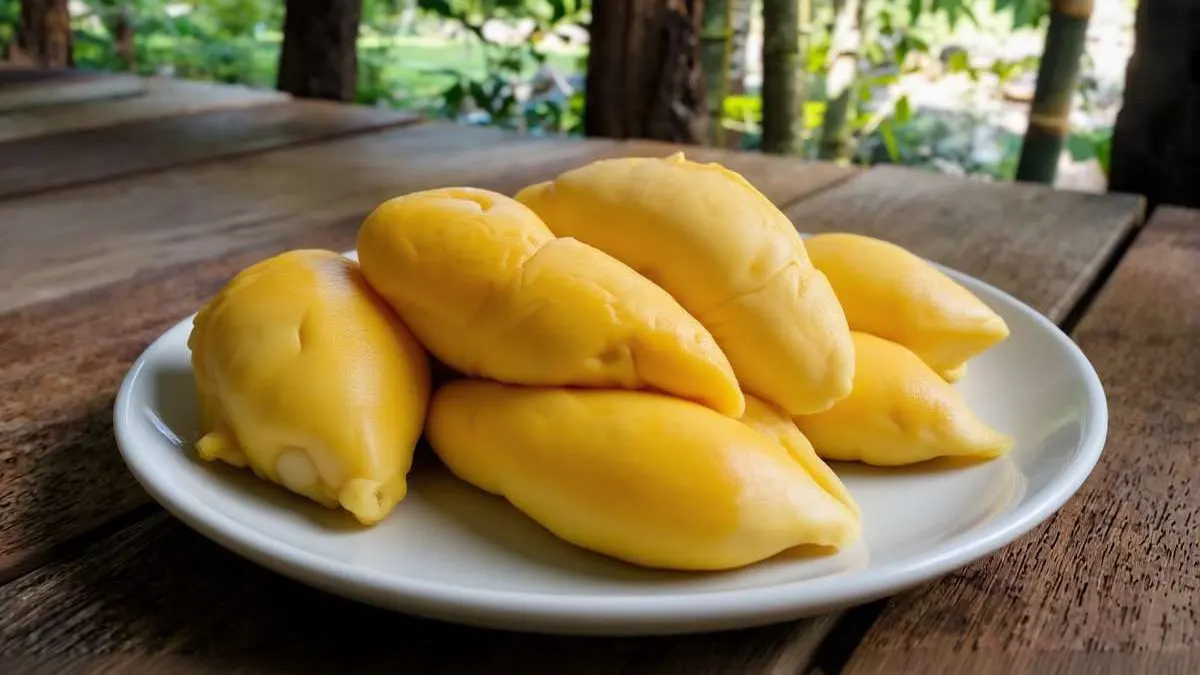
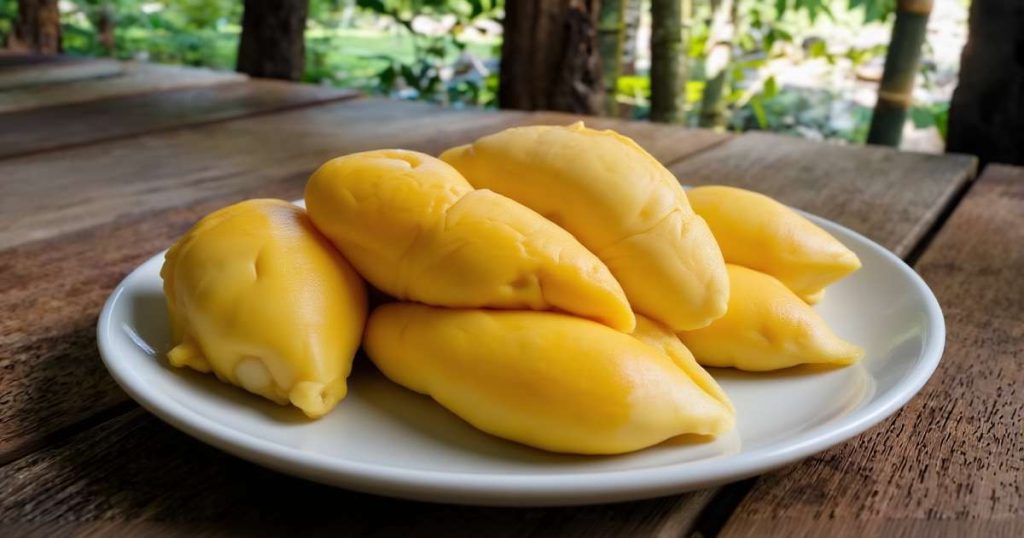
Durian — the legendary “King of Fruits” — creamy flesh inside a spiky, formidable exterior.
You can see this scene all over Southeast Asia. A fruit stall displays spiky, football-sized fruits. The smell reaches you from blocks away. This powerful aroma divides people right away. Meet durian, the legendary “King of Fruits.” This tropical fruit inspires either deep love or strong dislike. Hotels ban it, but festivals celebrate it. Clearly, durian is one of the world’s most fascinating food paradoxes.
Durian has a long history in Southeast Asia. Its name comes from the Malay word duri, which means “thorn.” For generations, people have crowned it the king of fruits. You can find it across Thailand, Malaysia, Indonesia, Singapore, and the Philippines. This fruit grows only in certain seasons. Typically, you’ll find it from June to August. As a result, its arrival is a big event. Fans track harvests just like wine lovers follow grape seasons.
If you enjoy unique Southeast Asian foods, you might also want to try balut in the Philippines or fried tarantula in Cambodia.
Want to learn more about the King of Fruits? Read National Geographic’s article on durian or explore BBC’s feature on durian.
Key Insight: The same chemicals that create the strong smell for some people are exactly what create the rich, creamy, caramel-like flavor that fans love.
Taste, Texture, and Popular Varieties
Durian flesh is soft, creamy, and custard-like. It melts in your mouth. The flavor develops in stages. First, you taste sweetness and creaminess. Then, you notice notes of caramel, vanilla, almond, and roasted nuts. Interestingly, some varieties even taste like cheesecake. The aftertaste is sweet with a hint of savory flavor.
Here are the most popular varieties:
- Musang King (Malaysia) — buttery and bittersweet with orange flesh
- Monthong (Thailand) — milder and sweeter with pale yellow flesh
- D24 (Malaysia) — a bitter-sweet balance with creamy texture
For other unique tropical fruits, learn about ackee from Jamaica.
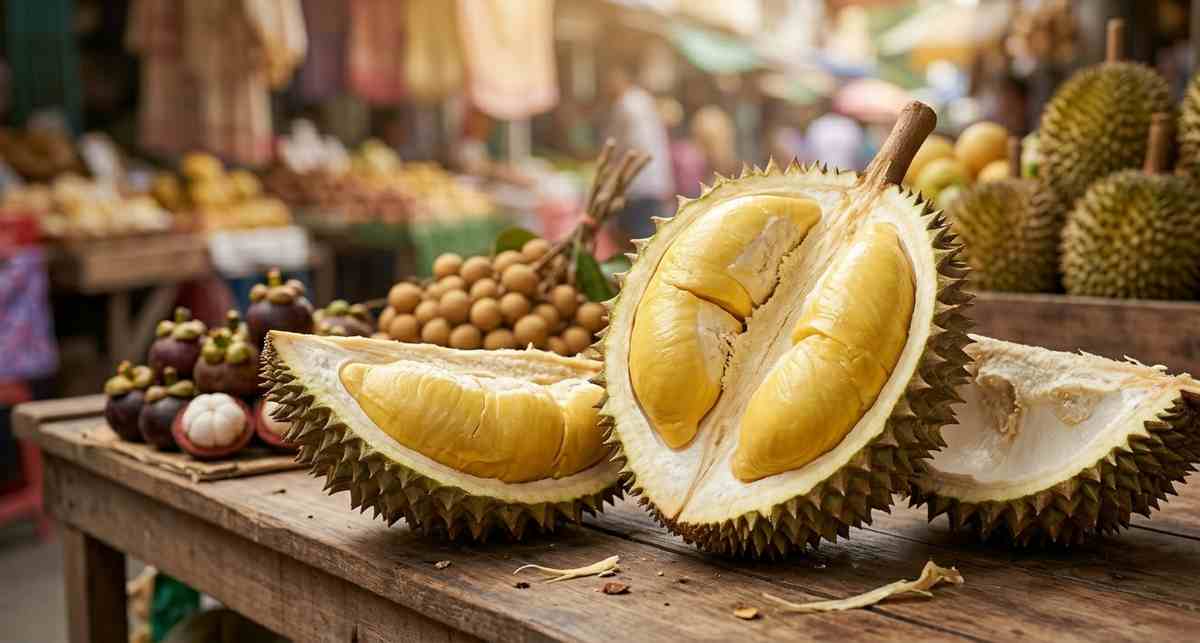
Popular durian varieties: Musang King (orange), Monthong (pale yellow), and D24 (golden).
Where to Find Durian in Southeast Asia
Best destinations:
- Penang, Malaysia — famous for boutique orchards
- Nonthaburi, Thailand — premium Monthong varieties
- Medan, Indonesia
- Davao, Philippines
Peak seasons: The seasons vary by country. For example, Thailand’s peak is April to June. Meanwhile, Malaysia’s peak is June to August.
Price range: Street stalls sell durian for $5-$15 per fruit. Orchard all-you-can-eat sessions cost $20-$50. However, premium Musang King can cost $50-$100 per fruit.
Traditional eating methods: You can eat it fresh from the shell using your hands. Some people chill it for a firmer texture. Others pair it with sticky rice.
Important note: Hotels, airports, and public transportation across Southeast Asia ban durian. Why? Because of its strong smell.
For more information on tropical fruits and food safety, check out WHO’s food safety guidelines.
Key Takeaways:
• Durian is the “King of Fruits” — creamy, custard-like flesh with a sweet-caramel flavor
• It contains 50 different chemical compounds that create its famous love-it-or-hate-it smell
• Popular varieties: Musang King (bittersweet), Monthong (mild, sweet), D24 (balanced)
• Peak seasons: Malaysia (June-August), Thailand (April-June)
• Price: $5-$15 at street stalls; premium Musang King up to $100
• Hotels, airports, and public transport across Southeast Asia ban durian
Ready to Meet the King of Fruits?
Follow EatSleepPush for more extreme food guides from around the world.