
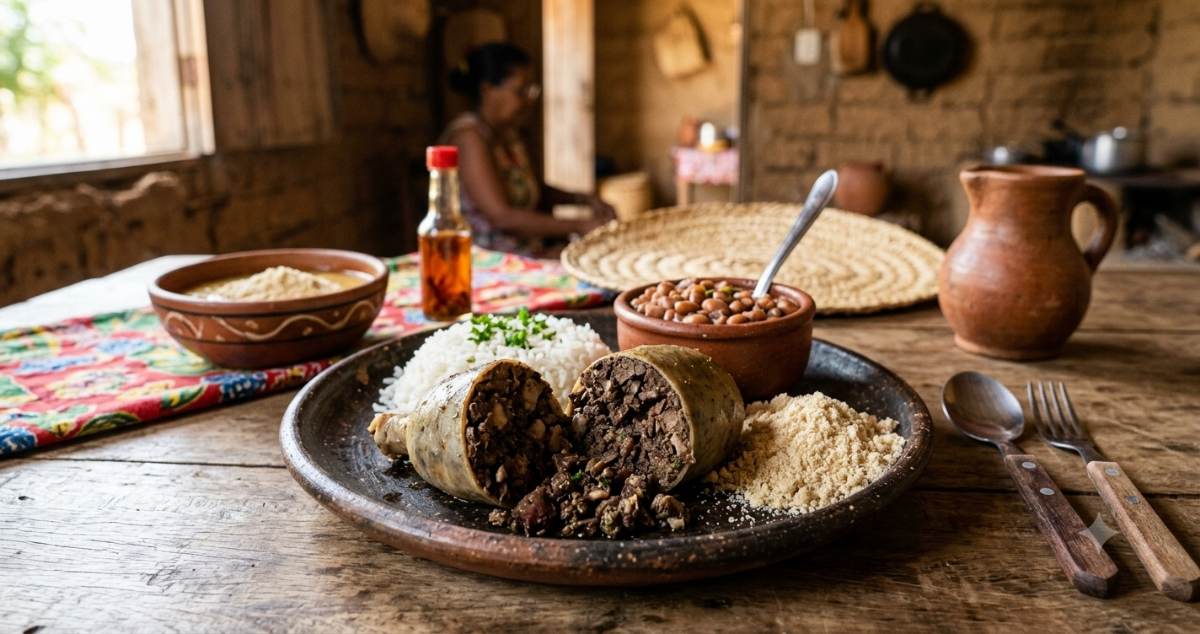
Northeast Brazil’s sertão is harsh and unforgiving. Yet locals have mastered the art of using every part of the animal. One of their proudest creations is Buchada de Bode. This hearty dish stuffs goat offal inside the animal’s own stomach. Many compare it to Scotland’s famous haggis. This extreme delicacy represents the region’s culinary heritage and resourcefulness.
For those fascinated by other traditional offal dishes, khash from the Middle East or lamb brain from the Middle East offer similarly adventurous eating experiences.
So what exactly is Buchada de Bode? The name comes from “bucho,” the Portuguese word for stomach. This dish transforms goat organs into a flavorful feast. The offal includes liver, lungs, heart, kidneys, and sometimes blood. Cooks chop the organs and mix them with onions, tomatoes, peppers, and spices like cumin, paprika, and coriander. They then stuff this mixture back into the goat’s stomach. A needle and thread seal the casing shut. The stuffed stomach then boils for hours until tender.
The result is a rich, savory dish that showcases the region’s culinary ingenuity. In Pernambuco and Ceará, buchada is so beloved that locals simply say “buchada” and everyone knows it’s made from goat. If you enjoy dishes with deep cultural roots, explore paniki from North Sulawesi or saren from Java.
To learn more about Brazil’s rich culinary heritage, visit the official Brazil tourism website’s culinary section.
Key Insight: Buchada de Bode is the South American cousin of Scottish haggis. Both dishes stuff animal stomachs with organs and spices. But buchada uses goat and adds bright, citrusy flavors like lime and cilantro.
How Buchada de Bode Is Made
The preparation of Buchada de Bode requires skill and patience. Here’s the traditional process:
- Step 1: First, the goat is slaughtered. Cooks collect the blood for later use. They carefully remove the stomach (bucho) and organs like liver, heart, lungs, and kidneys.
- Step 2: Then, they wash the stomach and intestines thoroughly with lime juice and vinegar. This removes impurities and gamey flavors.
- Step 3: Next, they chop the organs into small pieces. They mix them with onions, tomatoes, bell peppers, garlic, cumin, paprika, and coriander.
- Step 4: After that, they stuff the seasoned mixture into the goat’s stomach. The stomach acts as a natural casing. They fill it only halfway to allow room for expansion during cooking.
- Step 5: Then, they sew the stomach shut with a needle and thread. They pierce it several times to prevent it from exploding during cooking.
- Step 6: Finally, they boil the stuffed stomach in a seasoned broth for 2 to 4 hours until tender and fully cooked.
For other traditional dishes that use natural casings, explore casu marzu from Italy or fermented shark from Iceland.
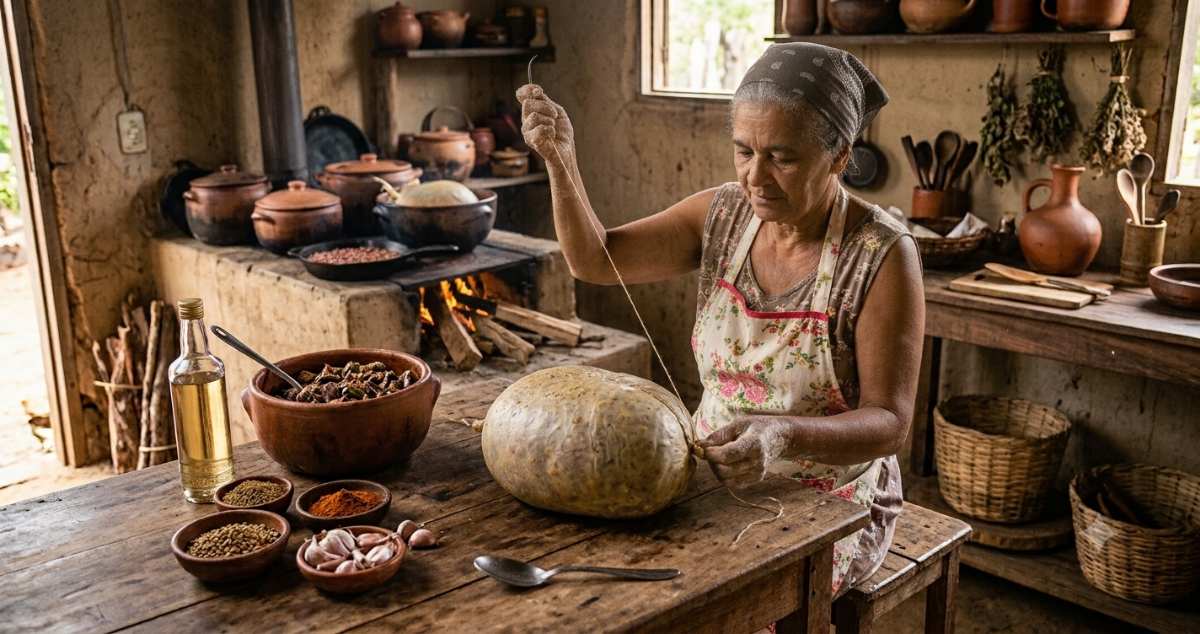
— sewing the goat stomach casing shut before boiling, a crucial step in buchada preparation.
What Does Buchada de Bode Taste Like?
Adventurous eaters often ask about the flavor. The taste is rich, savory, and deeply satisfying. The organ meats become tender and almost creamy during the long boiling process. The spices—cumin, paprika, garlic, and cilantro—create a complex, aromatic profile.
What sets Buchada de Bode apart from Scottish haggis is its bright, citrusy character. Lime juice, vinegar, and fresh herbs like cilantro and mint add a refreshing lift. This balances the richness of the offal perfectly. The distinctive stomach lining pattern is often visible when served, adding to its rustic appeal.
Locals traditionally serve buchada with white rice, beans, and farinha (manioc flour). These sides soak up the flavorful cooking juices. If you enjoy bold, earthy flavors, you might also appreciate natto from Japan or surströmming from Sweden.
The Cultural Significance of Buchada de Bode
For Northeast Brazilians, Buchada de Bode represents resilience and pride. This dish has humble origins. It was born from necessity in a region where poverty and drought made waste unthinkable. The cooking techniques trace back to Portuguese colonists, who brought similar offal dishes to Brazil.
Today, buchada holds a special place in the region’s identity. Families serve it at gatherings, festivals, and special occasions. The dish carries so much cultural weight that Brazilian politicians have publicly consumed buchada to prove they can relate to everyday people. It’s a dish that connects the elite to the masses, showcasing the region’s culinary soul.
For other traditional foods with deep cultural meaning, explore chicha de jora from Peru or lasima from Gaza.
For more insights on Brazilian cuisine and culture, read BBC Travel’s article on Brazilian regional cuisine.
Where to Find Buchada de Bode
Looking to try this extreme Brazilian delicacy? Here are the best places to find it:
- Northeast Brazil: The dish is most popular in Pernambuco, Ceará, and Paraíba. It’s a regional specialty there.
- Local restaurants: Traditional eateries (restaurantes típicos) in Recife, Fortaleza, and Campina Grande regularly feature buchada on their menus.
- Street vendors: At festivals and local markets, you’ll find vendors selling buchada as a hearty snack.
- Food tours: Some culinary tour operators in Northeast Brazil include buchada in their extreme food experiences.
Prices vary by location and preparation. But buchada remains an affordable and authentic taste of Brazil’s culinary heritage.
If you’re planning a food tour of South America, don’t miss frog juice from Peru or chicha de jora from Peru.
Important Note: Buchada de Bode contains organ meats, which are high in cholesterol and purines. Only eat this dish from reputable vendors who follow strict hygiene standards. Proper cooking (2-4 hours of boiling) is essential for safety. Consume in moderation. Consult healthcare professionals if you have dietary restrictions.
Nutritional Profile of Buchada de Bode
Buchada de Bode offers a nutrient-dense meal. Organ meats provide high-quality protein and essential vitamins. Liver is rich in iron and vitamin A. Heart contains CoQ10 and B vitamins. However, the dish is also high in cholesterol. One serving provides about 150-200 mg of cholesterol.
The addition of vegetables and spices adds fiber and antioxidants. But the dish remains a heavy, calorie-dense food. Nutritionists recommend eating it occasionally rather than regularly. Pair it with light sides like salad or vegetables to balance the meal.
For extreme food lovers, buchada delivers both nutritional value and cultural authenticity. Just enjoy it responsibly.
Key Takeaways:
• Buchada de Bode is a traditional Brazilian dish from the Northeast made from goat offal stuffed into the animal’s own stomach.
• The dish is often compared to Scottish haggis, with both using animal stomach as a natural casing.
• Offal includes liver, heart, lungs, kidneys, and blood, seasoned with cumin, paprika, garlic, and cilantro.
• Preparation involves stuffing, sewing, and boiling the stomach for 2-4 hours until tender.
• The dish holds deep cultural significance and is even consumed by politicians to connect with voters.
• You can find Buchada de Bode in restaurants and markets across Pernambuco, Ceará, and Paraíba.
• Always choose reputable vendors and ensure proper cooking for safety.
Ready to explore more extreme Brazilian cuisine?
Follow EatSleepPush for more adventurous food guides from around the world.