
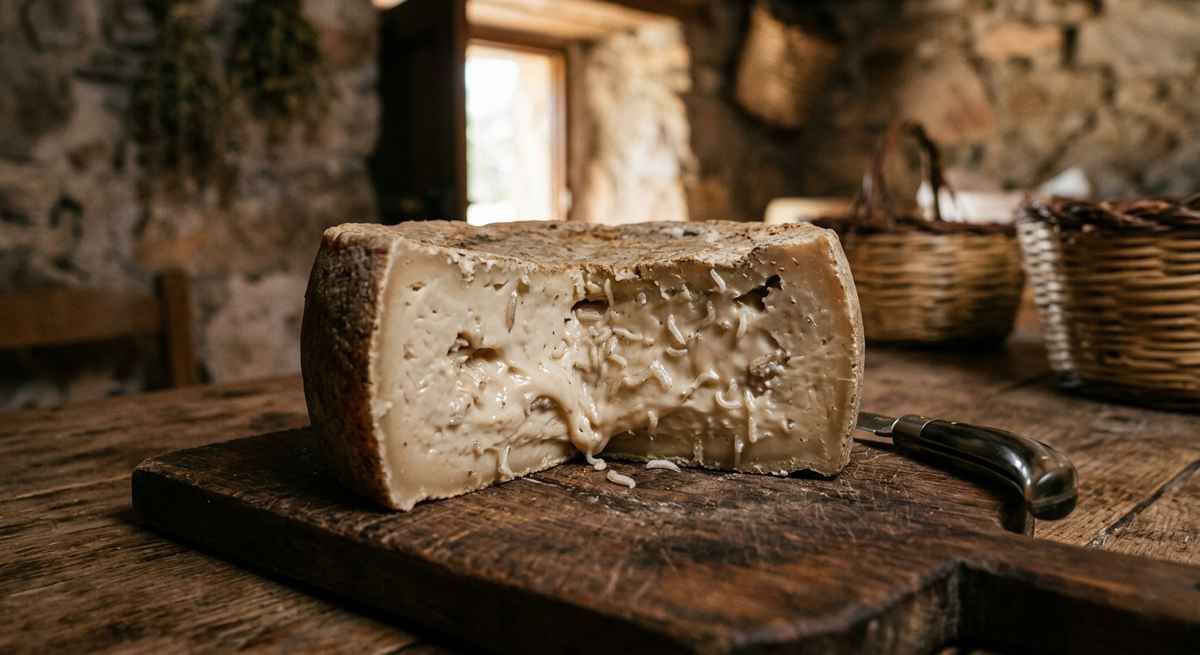
Casu Marzu — Sardinia’s traditional maggot-infested cheese, banned by the EU but cherished as a cultural icon.
In the rugged mountains of Sardinia, there exists a cheese so extreme that it has been officially banned by the European Union. For generations of Sardinians, Casu Marzu — which translates to “rotten cheese” — is not just food, but a cultural institution and the ultimate expression of courage at the dining table. This is not merely an aged cheese; it’s a living, breathing, and wriggling epicurean experience.
The story begins with shepherds making Pecorino Sardo, a traditional sheep’s milk cheese. Cheese flies would lay eggs in aging wheels. Rather than discarding the “contaminated” cheese, shepherds discovered that maggot digestive enzymes created an incredibly soft, pungent cheese.
For those who enjoy extreme fermented foods, you might also want to try surströmming from Sweden or century egg from China.
Want to learn more about this banned cheese? Read National Geographic’s article on Casu Marzu or explore BBC’s feature on Sardinia’s maggot cheese.
Key Insight: The cheese has an intensely sharp, pungent taste with a spicy, peppery finish and a distinct tingling sensation from maggot defensive secretions.
Taste, Texture, and How to Eat It
The texture is incredibly soft and creamy — almost liquid at room temperature. The flavor is intensely sharp and pungent with a spicy, peppery finish. Traditional serving methods include spreading it on Sardinian flatbread (pane carasau) and pairing it with strong red wine like Cannonau. There’s a specific technique: some cover the cheese with a paper bag to prevent jumping maggots from reaching their eyes. A properly made Casu Marzu should be teeming with live, active maggots that can jump up to 6 inches when disturbed.
For adventurous eaters seeking other unique experiences, try shiokara from Japan.
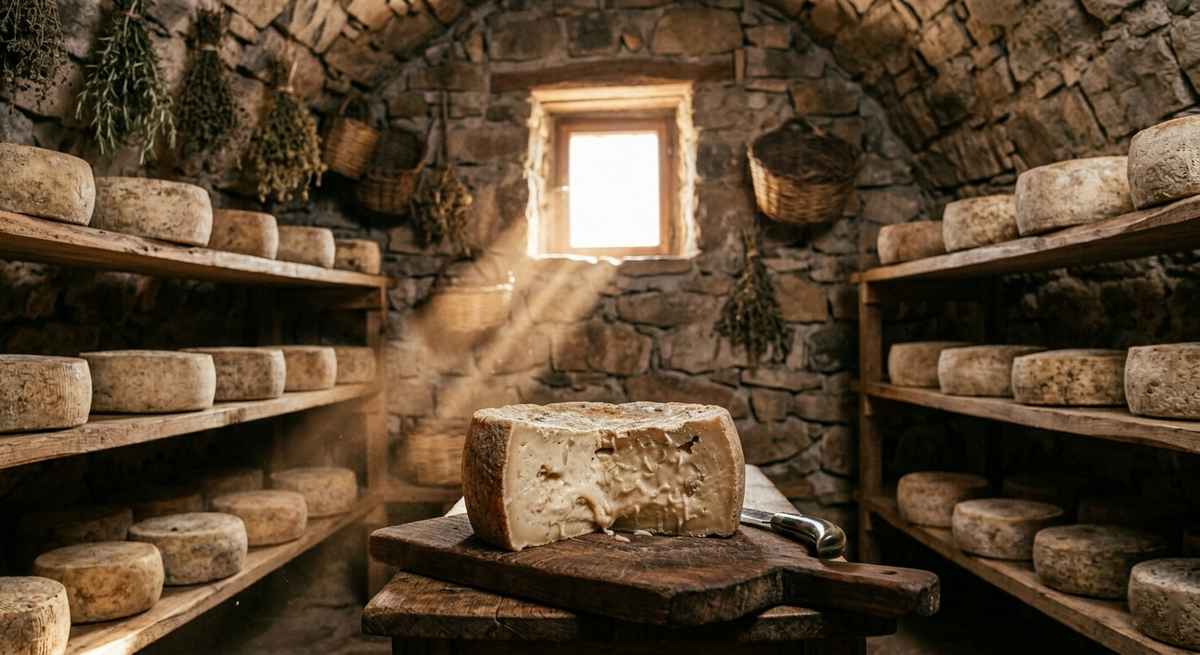
Traditional serving: Casu Marzu with pane carasau flatbread and Cannonau red wine.
Legal Status and Where to Find It
The European Union has classified Casu Marzu as unfit for human consumption, making its sale illegal. Health risks include possible myiasis (intestinal infestation) and bacterial contamination. Despite the ban, it continues to be produced in rural Sardinia. Finding it requires local knowledge — look in mountain villages, through local shepherds, or at some agriturismos for “educational” tastings. It’s never sold in regular shops. Production typically occurs from spring to autumn.
For more information on fermented foods and food safety, check out WHO’s food safety guidelines.
Key Takeaways:
• Casu Marzu is Pecorino Sardo cheese intentionally infested with live maggots
• The texture is soft and creamy; flavor is sharp, pungent, and spicy
• Banned by the EU due to health concerns (myiasis, bacterial risks)
• Only available through local shepherds in rural Sardinia
• Never eat cheese where maggots are dead — indicates improper production
Ready for the Ultimate Cheese Challenge?
Follow EatSleepPush for more extreme food guides from around the world.