
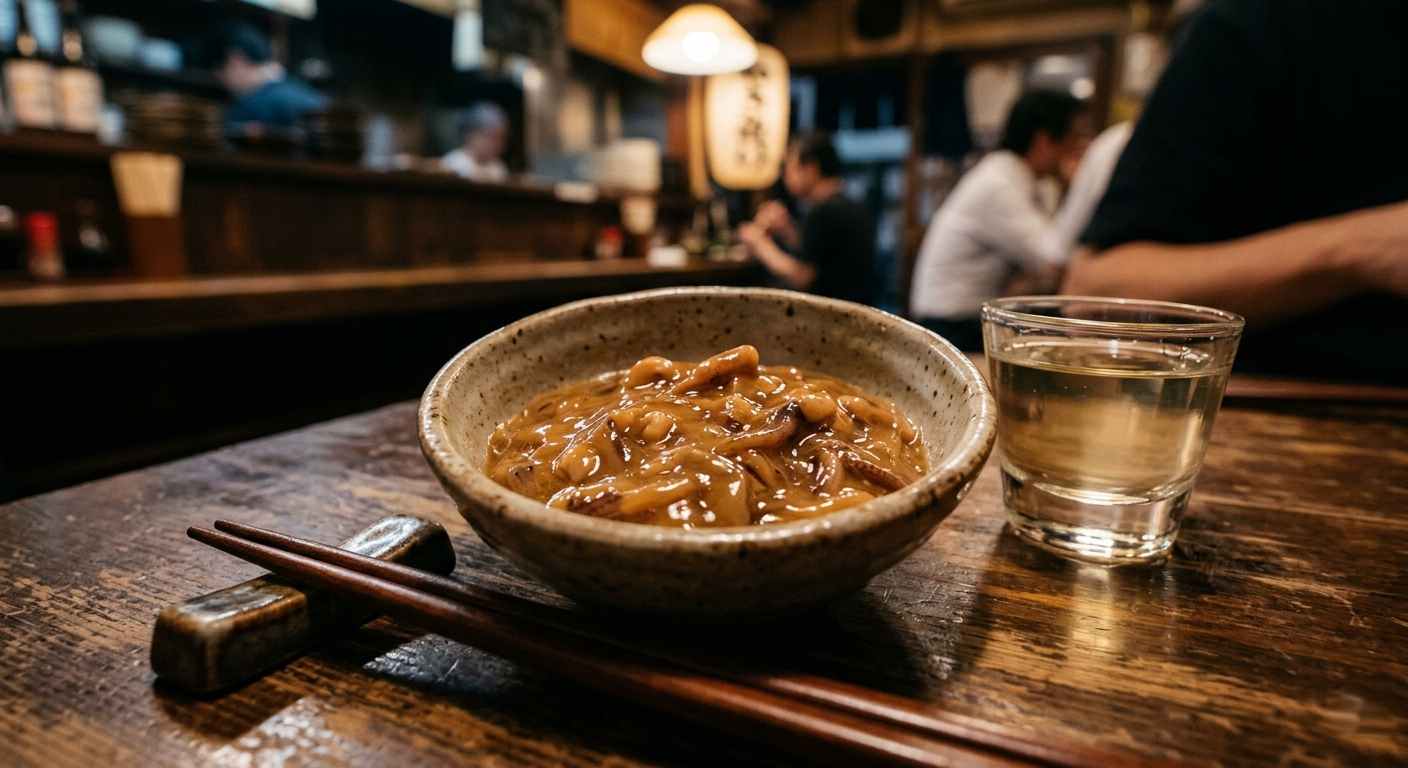
Shiokara (fermented squid) — Japan’s potent umami-rich seafood delicacy.
Japanese food has a wide range of flavors. Among them is a category called shoukouhin (珍味), which means “strange tastes.” One of the most challenging is Shiokara (塩辛). This is a strong, pungent dish made from fermented seafood. It delivers a huge umami explosion. This is not delicate sushi or comforting ramen. Instead, it is Japanese cooking in its most basic, honest form.
Shiokara (塩辛) literally means “salty spicy.” To make it, you chop up seafood (most often squid). This version is called Ika no Shiokara. Then you ferment it in its own salted internal organs. The fermentation takes 1 week to several months. The result is a thick, strong paste with an intensely savory flavor. This way of preserving food is very old. It dates back over a thousand years (to the Nara or Heian periods). It shows the Japanese principle of mottainai (勿体無い). This means a strong dislike of wasting anything.
For those who enjoy other fermented foods, try natto (fermented soybeans) or fugu, Japan’s deadly pufferfish.
Want to learn more about Japanese fermented seafood? Read National Geographic’s article on shiokara or explore BBC’s feature on shiokara.
Key Insight: People often call Shiokara “the Marmite of Japan.” You either love it or hate it. The traditional way to eat it is a small amount with steaming white rice.
Taste, Texture, and Popular Varieties
The smell is strong, salty, and very oceanic. The flavor gives you an intense hit of savory umami. Then you notice the saltiness. For Ika no Shiokara (squid), the squid pieces are slightly chewy. They sit in a thick, sticky, somewhat slimy paste. In Japanese, this texture is called nebenebe.
Other varieties include:
- Katsuo no Shiokara (bonito) — darker, firmer, deeper fishy flavor
- Uni no Shiokara (sea urchin) — premium, very rich and creamy
- Kaki no Shiokara (oysters) — very creamy with briny sweetness
For other unique Japanese seafood experiences, try sannakji in South Korea.

Shiokara varieties: squid (ika), sea urchin (uni), and oyster (kaki).
How to Eat Shiokara
The best way to eat Shiokara is with steaming white rice. Put a small amount on top of a mouthful of hot rice. The plain, comforting starch balances the strong saltiness perfectly. People also serve it as otsumami (bar snack) in izakayas. It goes well with cold beer, dry sake, or shochu. Sometimes they add fresh ginger or citrus (sudachi or yuzu).
Where to Try Shiokara
- Traditional izakayas in Tokyo, Osaka, and Kyoto
- Tsukiji Outer Market in Tokyo
- Don Quijote (supermarkets — they sell take-home jars)
- Hakodate (Hokkaido) — famous for Ika no Shiokara
Nutritional notes: Shiokara is high in protein, omega-3 fatty acids, probiotics, and vitamin B12. However, it is also very high in sodium (10-20% salt).
For more information on fermented foods and food safety, check out WHO’s food safety guidelines.
Key Takeaways:
• Shiokara is fermented seafood (usually squid) in salted internal organs — a 1,000+ year tradition
• Taste: very salty, strong umami, strong fishy flavor — an acquired taste
• Texture: chewy squid pieces in a thick, sticky, slightly slimy paste
• Best eaten as a small amount with steaming white rice (not alone)
• Popular varieties: squid (ika), bonito (katsuo), sea urchin (uni), oyster (kaki)
• High in protein and omega-3s, but very high in sodium
Ready to Try Japan’s Umami Bomb?
Follow EatSleepPush for more extreme food guides from around the world.