
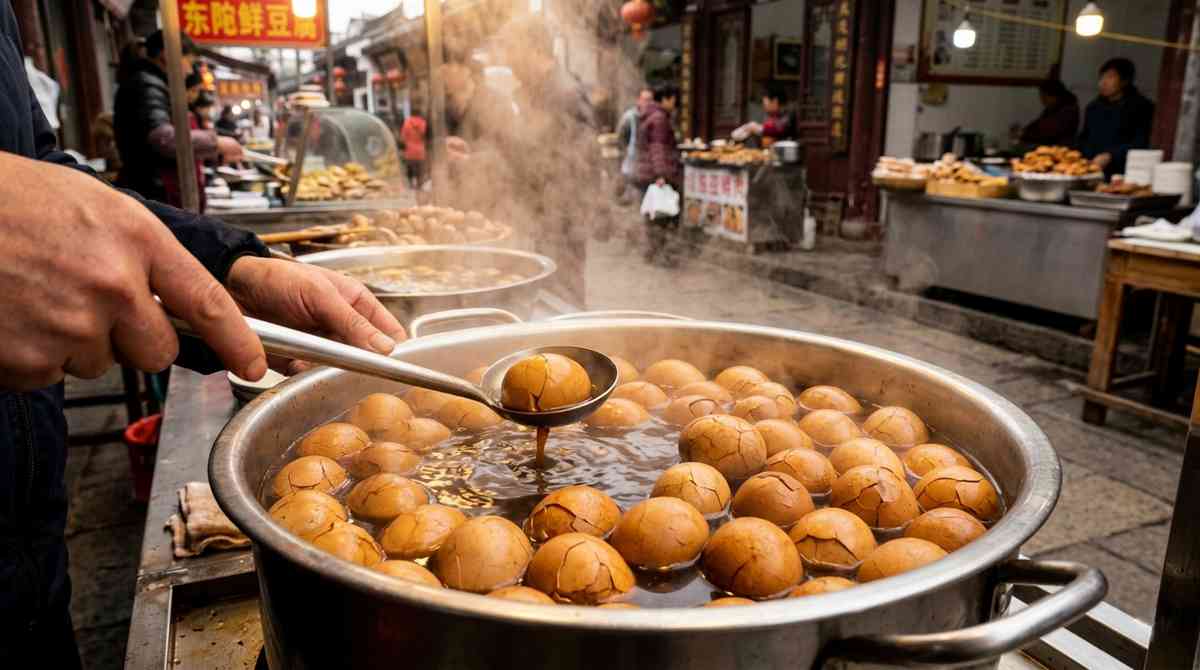
Tong Zi Dan — eggs cooked in young boys’ urine, a centuries-old spring tradition in Dongyang, China.
In the city of Dongyang, Zhejiang province, a unique springtime tradition turns ordinary chicken eggs into one of China’s most debated delicacies. This dish is called Tong Zi Dan (童子蛋), which literally means “virgin boy eggs.” Cooks simmer these eggs for hours in a bubbling pot of urine. They collect the urine exclusively from young boys under ten years old. The finished eggs have amber-colored shells and a strong smell. This centuries-old practice sits at the crossroads of Chinese folk medicine, cultural tradition, and culinary adventure.
Tong Zi Dan originated in Dongyang centuries ago. The practice has roots in Traditional Chinese Medicine (TCM). TCM texts have documented urine (called renlong or “human dragon”) as a therapeutic substance for over 2,000 years. Why use young boys’ urine? The TCM concept says that prepubescent boys represent the purest vital energy (Yang qi). Adults, in contrast, have “contaminated” energy. Historically, Dongyang was a poor area. Therefore, the tradition likely began as a resourceful way to provide a nutritious springtime tonic.
For those interested in other unique Chinese foods, try century egg (pídàn) or balut in the Philippines.
Want to learn more about this controversial tradition? Read National Geographic’s article on Tong Zi Dan or explore BBC’s feature on urine eggs.
Key Insight: The smell is strong, sharp, and very much like urine — you can detect it from far away. The taste is very salty, slightly bitter, with clear ammonia-like notes.
How People Make Tong Zi Dan
Collecting the urine: Local parents provide buckets at primary schools for boys under ten to urinate into. This is the first step.
The cooking process: First, workers submerge raw eggs in urine and boil them until hard-boiled. Second, they gently crack the shells all over. Then, they give the eggs a second long simmering for most of the day. This extended cooking gives the eggs their characteristic brownish, marbled appearance.
For other fermented or preserved foods, try shiokara from Japan.
What Tong Zi Dan Tastes Like
The egg white becomes very firm and rubbery. The yolk turns dry, crumbly, and greenish-grey in color. People who like the dish describe a unique “fragrance” and a rich, savory depth. However, it is definitely an acquired taste. Enjoying it often requires a connection to the local culture and childhood memories.
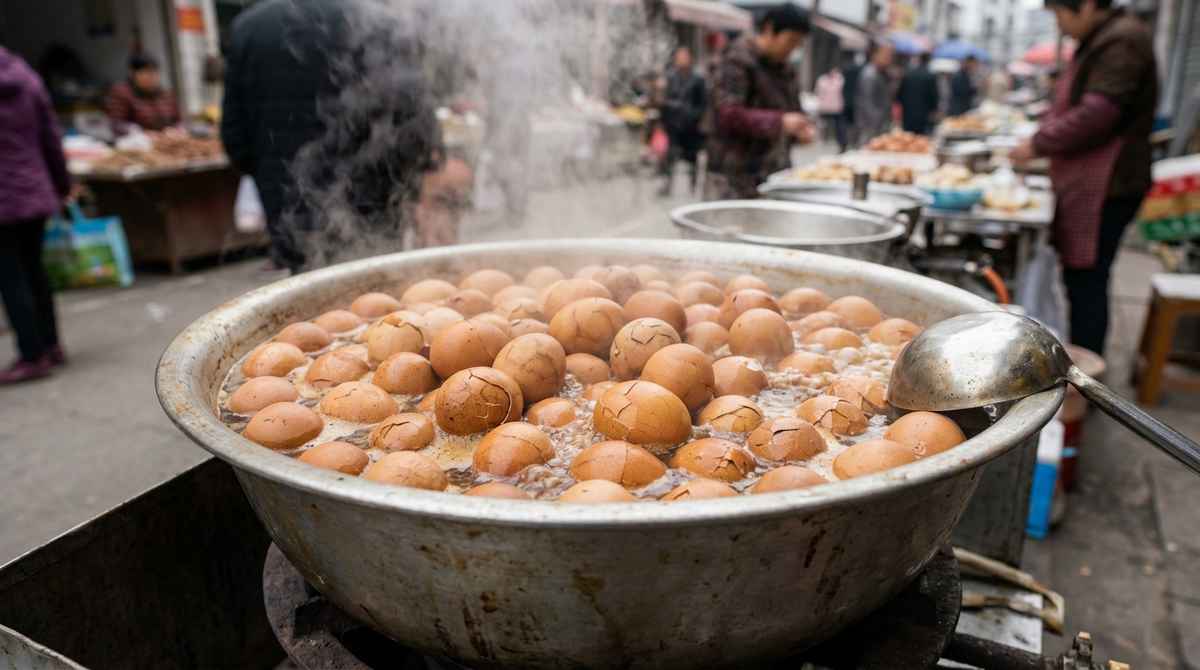
Tong Zi Dan simmering in a large pot — the eggs develop their characteristic amber color after hours of cooking.
Health Claims Behind Tong Zi Dan
Traditional beliefs claim these eggs offer several health benefits. For example, people say they can prevent bodily “heatiness” and fatigue. Others claim they improve blood circulation, reinforce qi (vital energy), and promote muscle recovery.
Modern science sees things differently. Scientists find little support for these claims. Urine is mostly water, urea, salts, and waste products. Most Western doctors argue there are no proven health benefits. In fact, there may be potential risks.
The Controversy Around Tong Zi Dan
Every spring, this tradition sparks heated debate on Chinese social media. Many people call it “uncivilized” and unhygienic. Public health officials have occasionally tried to ban the practice. However, these efforts have failed due to strong local demand.
For locals, Tong Zi Dan represents more than just food. It’s a taste of nostalgia and a marker of cultural identity. Nevertheless, the future of Tong Zi Dan hangs in the balance. Younger generations show less enthusiasm for this tradition.
For more information on traditional foods and food safety, check out WHO’s food safety guidelines.
Key Takeaways:
• Tong Zi Dan are chicken eggs cooked for hours in young boys’ urine (under age 10)
• The practice comes from TCM belief that prepubescent boys have the purest Yang qi
• Smell: strong, sharp, like urine — taste: very salty, bitter, with ammonia-like notes
• Texture: egg white becomes firm and rubbery; yolk turns dry, crumbly, greenish-grey
• No scientific evidence supports the health claims — urine is a waste product
• A controversial but persistent spring tradition in Dongyang, China
Ready to Learn About China’s Extreme Foods?
Follow EatSleepPush for more extreme food guides from around the world.