
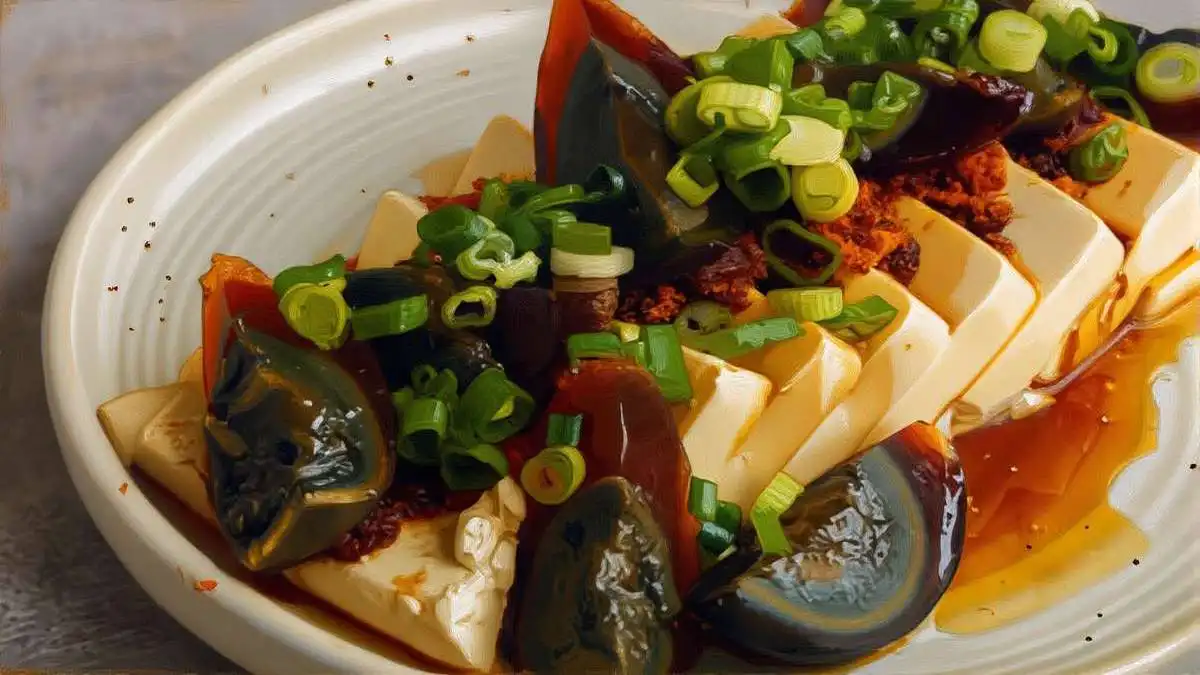
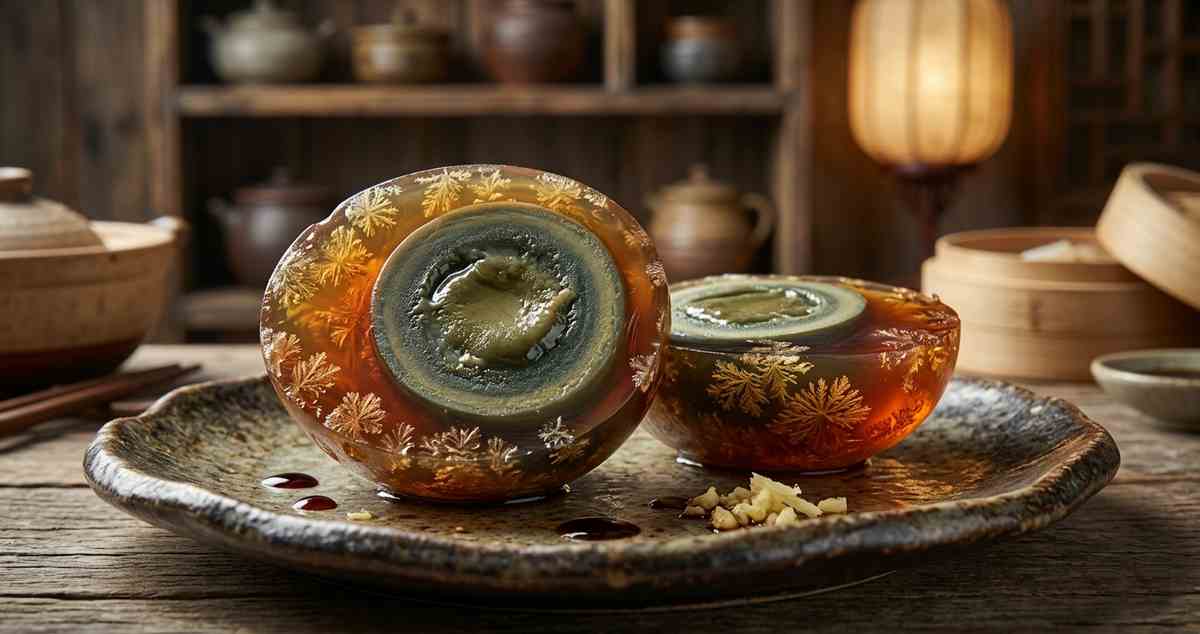
Century egg (pídàn) — dark green yolk and translucent amber-white with characteristic “pine-flower” patterns.
In Chinese cuisine, few foods generate as much curiosity as the century egg. With its striking appearance — dark green yolk and translucent amber-white — this preserved egg has been challenging palates for centuries. Known as pídàn (皮蛋) or “pine-patterned egg,” it’s not actually centuries old but represents one of the most ingenious food preservation methods in culinary history.
The origins date back to the Ming Dynasty (14th-17th century), when a homeowner in Hunan discovered duck eggs preserved in a slaked lime pit. What began as an accident evolved into a sophisticated method using wood ash, calcium oxide, salt, and black tea. The process takes several weeks to a few months, raising the pH to 9-12, which transforms the egg proteins.
For those who enjoy unique preserved foods, you might also want to try balut in the Philippines or fried tarantula in Cambodia.
Want to learn more about this Chinese delicacy? Read National Geographic’s article on century eggs or explore BBC’s feature on pídàn.
Key Insight: The flavor is often compared to a fine, aged cheese with mineral undertones — not “rotten” as many foreigners anticipate.
Taste, Texture, and Traditional Serving Methods
The egg white becomes a firm, gelatinous jelly with snowflake-like patterns. The yolk turns creamy, dark green, and paste-like. The flavor profile is rich, creamy, slightly salty, with earthy cheese-like notes and a clean mineral finish. Century eggs are rarely eaten alone. The most popular preparations include:
- Century Egg Congee (皮蛋瘦肉粥) — rice porridge with sliced century egg and pork
- Century Egg with Tofu (皮蛋豆腐) — served over silken tofu with soy sauce and sesame oil
- Sliced with pickled ginger as a palate cleanser
This preservation method shares similarities with other traditional fermented foods like surströmming from Sweden, though the flavor profile is entirely different.
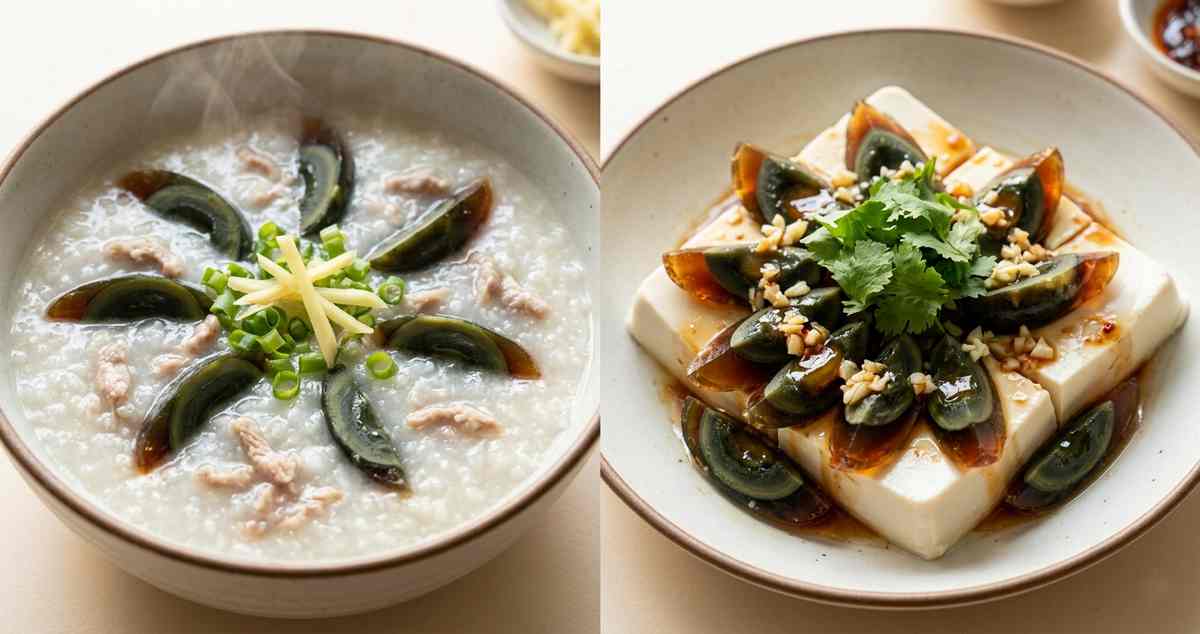
Traditional serving methods: Century egg congee (left) and century egg with silken tofu (right).
Where to Find Century Eggs
You can find them in Chinese supermarkets (vacuum-packed), traditional markets, or congee restaurants. When selecting, choose eggs that feel heavy for their size and look for “pine-flower” patterns. For first-timers: start with mixed dishes like congee rather than eating it plain, expect complex flavors, and pair with complementary foods.
Modern commercially produced century eggs are lead-free and safe to eat, undergoing rigorous quality control.
For more information on preserved foods and food safety, check out WHO’s food safety guidelines.
Key Takeaways:
• Century eggs are preserved for weeks to months, not centuries
• The flavor is cheese-like and mineral-rich, not “rotten”
• Best enjoyed in congee or with tofu, not alone
• Rich in protein and minerals, but high in sodium
• Modern commercial versions are lead-free and safe
Ready to Try the Century Egg?
Follow EatSleepPush for more guides on unique and traditional foods from around the world.