
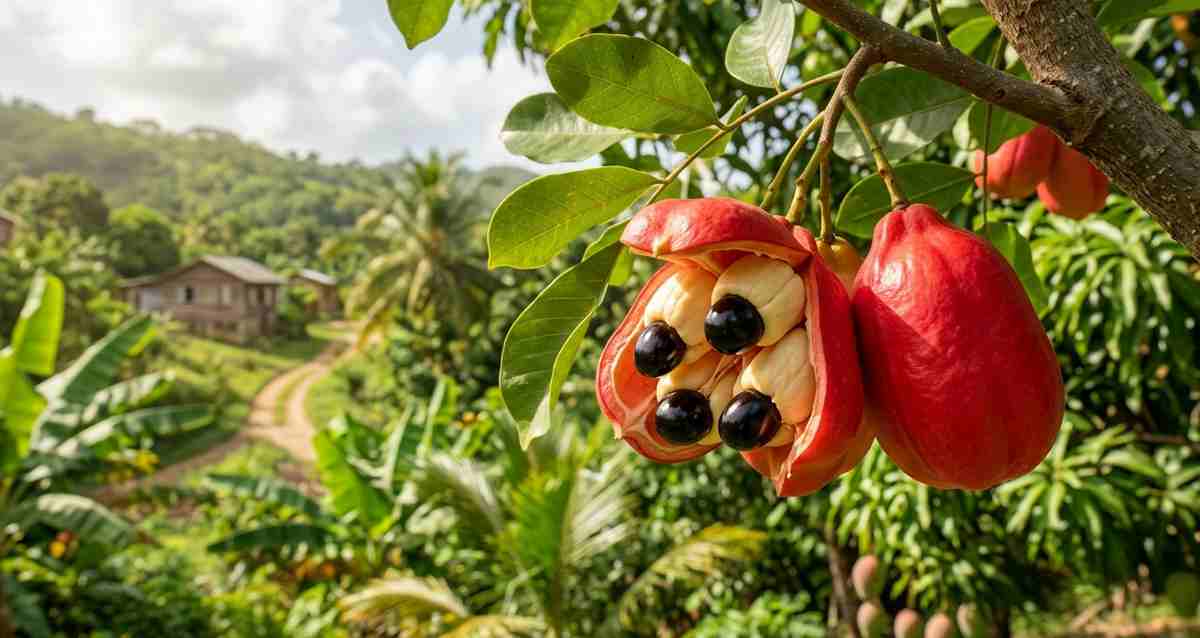
Ackee — Jamaica’s national fruit — vibrant red pods reveal creamy yellow arils when ripe.
In the lush hills of Jamaica, there grows a tree bearing one of the most unusual fruits in the Caribbean — the ackee. With vibrant red pods that burst open to reveal delicate cream-colored arils, ackee is not only Jamaica’s national fruit but the star ingredient in the country’s national dish: ackee and saltfish. Yet this beautiful fruit carries a dangerous secret — when unripe, it contains a potent toxin that can cause “Jamaican Vomiting Sickness,” making its preparation a matter of life and death.
Ackee (Blighia sapida) is native to West Africa and was brought to Jamaica in the late 18th century aboard slave ships. The name derives from the Akan language of Ghana (anke or akye). In 1962, when Jamaica gained independence, ackee and saltfish was designated the national dish. Unripe ackee contains hypoglycin A, a toxin that interferes with glucose metabolism and can cause severe vomiting, coma, or death.
For those who enjoy unique Caribbean foods, you might also want to read about the deadly manchineel fruit of the Caribbean or try balut in the Philippines.
Want to learn more about Jamaica’s national fruit? Read National Geographic’s article on ackee or explore BBC’s feature on ackee and saltfish.
Key Insight: The fruit has a built-in safety feature — pods only become safe when they naturally ripen and burst open on the tree. A closed pod is nature’s “do not eat” sign.
Taste, Texture, and Ackee and Saltfish
When properly prepared, ackee offers a unique experience. The raw arils are creamy yellow with glossy black seeds. When cooked, they become soft and delicate, resembling scrambled eggs with a buttery, luxurious mouthfeel. The flavor is mild and nutty with buttery richness and slight sweetness (hints of nutmeg and almond). This mildness makes ackee the perfect partner for strongly flavored saltfish.
The classic preparation involves: soaking salt cod overnight, sautéing with onions, Scotch bonnet peppers, thyme, and scallions, then gently folding in cooked ackee. Served with fried dumplings, boiled green bananas, or breadfruit.
For other national dish experiences, read about durian, Southeast Asia’s King of Fruits.
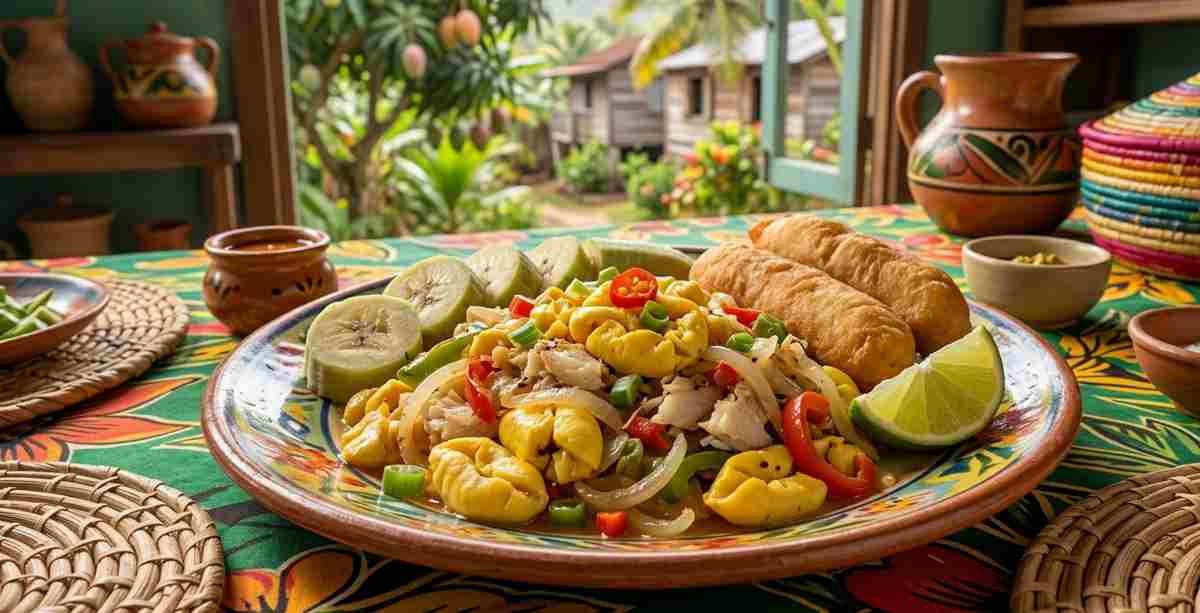
Ackee and saltfish — Jamaica’s national dish — served with fried dumplings and boiled green bananas.
Where to Find Ackee and Safety Tips
Ackee has two main seasons in Jamaica: January to March (minor season) and June to August (major season). Best places to experience it include local cookshops (authentic home-style preparation), roadside stalls during season, and hotels/resorts (breakfast buffets).
Most Jamaicans today use canned ackee (Grace and Lindo brands) for consistent quality, safety, and year-round availability. Canned ackee is exported worldwide. For first-timers: start with canned ackee from reputable brands, dine at established Jamaican restaurants, and never attempt to prepare fresh ackee without expert guidance.
The fruit represents the ingenuity of enslaved Africans who adapted their culinary traditions to new environments.
For more information on food safety and toxic fruits, check out WHO’s food safety guidelines.
Key Takeaways:
• Ackee is Jamaica’s national fruit — toxic when unripe, safe when naturally opened
• Contains hypoglycin A toxin causing “Jamaican Vomiting Sickness” — no antidote
• Cooked ackee resembles scrambled eggs with a mild, nutty, buttery flavor
• National dish: ackee and saltfish with fried dumplings and boiled bananas
• Seasons: January-March (minor) and June-August (major)
• First-timers should start with canned ackee from reputable brands
Ready to Try Jamaica’s National Dish?
Follow EatSleepPush for more extreme food guides from around the world.