

In the chaotic, colorful streets of India, one snack reigns supreme. This is Phuchka — known as Pani Puri in Mumbai, Golgappa in Delhi, and Puchka in Kolkata. This hollow, fried dough ball filled with spiced potato, tangy tamarind chutney, and fiery chili water is the undisputed king of Indian street food. It’s a sensory explosion — a perfect balance of sweet, sour, spicy, and crunchy in a single bite.
The name changes by region: Phuchka in Kolkata (onomatopoeic — mimics the sound when you bite), Pani Puri in Mumbai, Golgappa in Delhi, and Gup Chup in parts of central India. The origins trace back to the Magadha Empire (modern-day Bihar) over 1,000 years ago. Today, millions of servings are consumed daily across the subcontinent. A perfect Phuchka has four components: the shell (puri — made from semolina, deep-fried crispy), the filling (masala — mashed potatoes with chaat masala, black salt, chili powder), the spicy water (teekha pani — mint, coriander, green chili, black salt), and the sweet chutney (meetha pani — tamarind, dates, jaggery).
For those interested in other Indian snacks, try phuchka recipes.
Want to learn more about Indian street food culture? Read National Geographic’s article on Indian street food or explore BBC’s feature on phuchka.
Key Insight: Eat it within seconds of preparation — a Phuchka has a short shelf life before the shell gets soggy. Pop the entire thing in your mouth in one go. Biting it in half will cause the water to spill everywhere.
Regional Variations and Where to Find the Best
Kolkata (Phuchka): Water is intensely spicy and tangy; filling includes spiced mashed potatoes and black chickpeas; emphasis on the “pop” — water should splash when you bite. Best at Vivekananda Park, Dakshinapan, New Market (₹10–20 per plate).
Delhi (Golgappa): Water is thinner and more minty; filling often includes sprouted moong beans; puris are smaller and crispier. Best at Lajpat Nagar Market, Chandni Chowk (₹20–30 per plate).
Mumbai (Pani Puri): Water has distinctive sweet-sour balance from tamarind and dates; served with sev (crispy chickpea noodles). Best at Juhu Beach, Girgaum Chowpatty (₹20–40 per plate).
Outside India: Look for Indian chaat restaurants in New York (Jackson Heights), London (Southall), Toronto (Gerrard Street), or Dubai (Karama).
For other Indian street food guides, read about Indian street food safety tips.
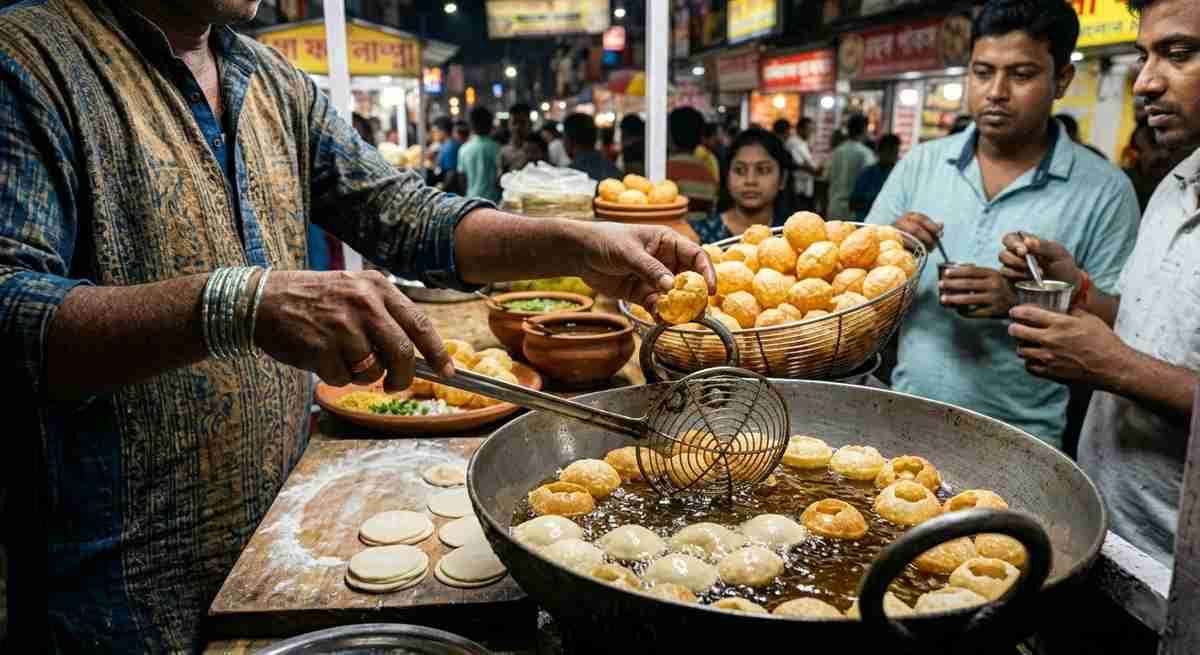
A Kolkata street vendor preparing fresh phuchka shells — crispy, golden, and ready to be filled.
How to Eat Phuchka Like a Local
Step-by-step: Watch the vendor crack a small hole in the puri, fill with potato masala, and dip into both waters (first sweet, then spicy). Take it immediately — eat within seconds. One bite only — pop the entire thing into your mouth. Chew and experience the explosion of flavors. Order in rounds — most people eat 4-6 Phuchkas in a sitting (ask for “ek plate” — one plate).
Pro tip: Ask for “teekha” (spicy) if you want heat, or “meetha” (sweet) for a milder experience.
Safety for first-time visitors: Choose busy stalls with high turnover (fresher ingredients). If you have a sensitive stomach, look for vendors using bottled or filtered water. Traditional Phuchka is completely vegetarian (no meat, fish, or eggs).
For more information on food safety and street food guidelines, check out WHO’s food safety guidelines.
Key Takeaways:
• Phuchka = Pani Puri = Golgappa — India’s most popular street snack
• Four components: crispy puri shell, spiced potato filling, spicy mint water, sweet tamarind chutney
• Regional differences: Kolkata (spiciest water), Delhi (minty water), Mumbai (sweet-sour balance)
• Eat immediately in one bite — order “ek plate” (4-6 pieces)
• Price: ₹10–40 per plate ($0.12–$0.50 USD) depending on city
• Completely vegetarian — choose busy stalls with high turnover for safety
Ready to Try India’s Favorite Street Snack?
Follow EatSleepPush for more street food guides from around the world.