

Dabb Lizard — whole roasted desert reptile — is one of the Middle East’s most shocking traditional foods. While it might sound terrifying, this Bedouin delicacy from Oman, Libya, and Egypt offers a surprisingly mild, tender white meat that many compare to chicken. Known as “Dabb” (Uromastyx aegyptia), this spiky-tailed lizard is rich in protein, very low in fat, and believed by locals to have powerful medicinal properties.
The flavor is mild, slightly sweet, and clean — far less gamey than expected. The texture is firm but flaky, similar to chicken breast or frog legs, and the crispy skin adds a pleasant crunch. Dabb lizard is typically served whole on a large platter, eaten with hands or flatbread. Locals believe it treats rheumatism, back pain, infertility, and boosts stamina for harsh desert travel. In Bedouin culture, eating dabb shows strength and deep connection to the desert.
For those interested in other Middle Eastern extreme foods, try lamb brain (mokh) or sheep eyeballs.
Want to learn more about Middle Eastern desert cuisine? Read National Geographic’s article on Bedouin food traditions or explore BBC’s feature on desert delicacies.
Key Insight: The secret to eating dabb lizard for the first time is ignoring its appearance. The white meat tastes like a mix between chicken and frog legs — mild, slightly sweet, and very tender.
How Dabb Lizard Is Captured and Cooked
Capturing method (traditional): Bedouin hunters track dabb lizards at dawn when they emerge from burrows to sunbathe. Using long thin sticks, they block the lizard’s escape hole. Then they carefully grab the spiky tail — one quick pull extracts the lizard. The tail can whip and scratch, so only experienced hunters attempt this.
Cooking process (step by step): First, the lizard is cleaned and gutted (the spiny tail is kept for presentation). Second, it’s skewered on a metal rod or green branch. Third, it’s roasted over hot desert coals for 30-45 minutes, turning occasionally until the skin cracks and white meat appears. Some Bedouins stuff the belly with rice, herbs, and onions before roasting. The final dish is served whole on a large platter — eaten with hands or flatbread.
For other extreme desert survival foods, explore khash (ancient sheep soup) or fermented seafood specialties.
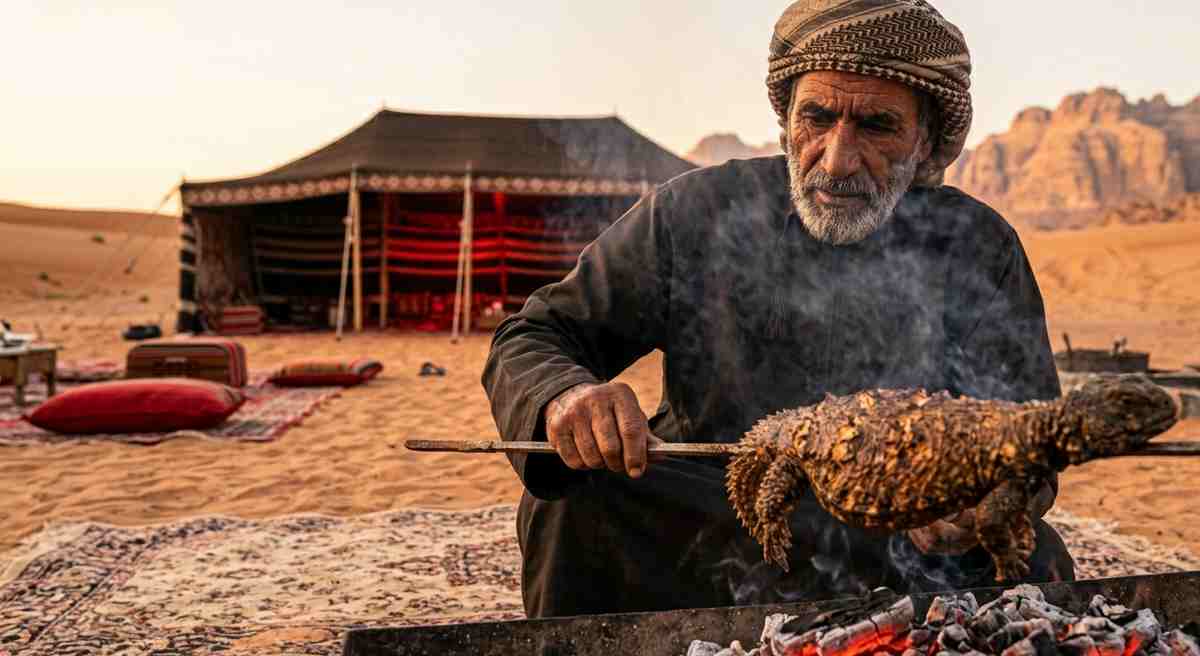
Bedouin man roasting Dabb lizard over an open fire pit in Oman’s desert — traditional cooking method unchanged for generations.
What Does Dabb Lizard Taste Like?
First-time eaters report a mild, white meat flavor similar to chicken breast or frog legs. The texture is firm but flaky, not rubbery. The skin becomes crispy like roasted chicken skin. There is no “gamey” or “reptile” aftertaste — just a clean, slightly sweet protein.
Halal status debate: Most mainstream Islamic scholars consider lizards haram (forbidden) because they are vermin. However, some Bedouin tribes follow a different interpretation — they believe the Prophet Muhammad did not explicitly forbid dabb, and some companions ate it. This makes dabb a controversial but culturally significant food in rural areas.
Where to Find Dabb Lizard in the Middle East
Sinai Desert (Egypt): Bedouin camps near Dahab or Nuweiba offer dabb to adventurous tourists. This is the most accessible location for travelers.
Wahiba Sands (Oman): Desert safari tours sometimes include traditional dabb feasts. Ask local tour operators for authentic experiences.
Southern Libya (Awaynat region): Remote villages where dabb is still a staple food. This location is difficult to access and requires special permits.
Our advice: Your best chance is hiring a local Bedouin guide — they rarely advertise this dish publicly. Prices range from $15-30 USD per whole lizard in tourist Bedouin camps. Always respect local customs and ask permission before taking photos.
For other unique Middle Eastern foods, read about lamb brain or sheep eyeballs.
For more information on food safety and traditional preservation methods, check out WHO’s food safety guidelines.
Key Takeaways:
• Dabb lizard (Uromastyx) is a spiky-tailed reptile roasted whole by Bedouins in Oman, Libya, and Egypt
• Flavor: mild white meat similar to chicken/frog legs — firm, flaky, slightly sweet, no gamey taste
• How to cook: gutted, skewered, roasted 30-45 min over hot coals, sometimes stuffed with rice
• Medicinal beliefs: treats rheumatism, back pain, infertility — boosts stamina for desert travel
• Halal controversy: mainstream says haram, but some Bedouin tribes eat it as cultural tradition
• Where to try: Sinai desert (Egypt), Wahiba Sands (Oman), remote Libya — with Bedouin guide
• Price: $15-30 USD per whole lizard in tourist Bedouin camps
Ready to Try the Desert’s Most Controversial Reptile?
Follow EatSleepPush for more extreme food guides from around the world.