

Lasima Gaza — also known as Ajar — is one of Palestine’s most surprising and unconventional dishes. This savory roasted watermelon mash comes from the Gaza Strip, where cooks turn unripe watermelon into a smoky, garlicky spread. While the world knows watermelon as a sweet summer fruit, Palestinians in Gaza have transformed it completely.
The flavor will surprise you — smoky, earthy, savory, and deeply umami, with zero sweetness. The texture is soft, rustic, and intentionally “messy.” Locals say the messier, the better.
People typically eat Lasima as a dip with fresh khubz (flatbread) or as a side dish alongside grilled meats. This dish represents the resourcefulness of Gazan cuisine — using unripe watermelons that would otherwise go to waste.
Interested in other extreme Middle Eastern foods? Try lamb brain (mokh) or sheep eyeballs.
Want to learn more about Gazan cuisine? Read BBC’s feature on Gazan food culture or explore The New Arab’s article on Gaza’s heritage dishes.
Key Insight: The secret to Lasima is using unripe (green) watermelon. When roasted, the flesh becomes tender and savory instead of sweet — completely transforming the fruit.
How Lasima Is Made: From Fire to Bowl
Step 1: Place an unripe (green) watermelon directly on hot coals or an open flame. Roast it for 20-30 minutes, turning occasionally until the entire skin turns black and charred.
Step 2: Remove the roasted watermelon and let it cool slightly.
Step 3: Peel off the blackened skin. You’ll find soft, steaming, pale green flesh underneath.
Step 4: Transfer the flesh to a large ceramic or wooden bowl.
Step 5 — the most important step: Mash everything by hand (no food processors allowed). Crush the roasted watermelon together with roasted eggplant, fresh garlic cloves, tomatoes, green peppers, salt, and generous amounts of olive oil.
The result is a rustic, chunky, messy paste. Some families add lemon juice or chili for extra kick.
For a similar ancient desert survival food, explore khash (ancient sheep soup) or fermented seafood specialties.
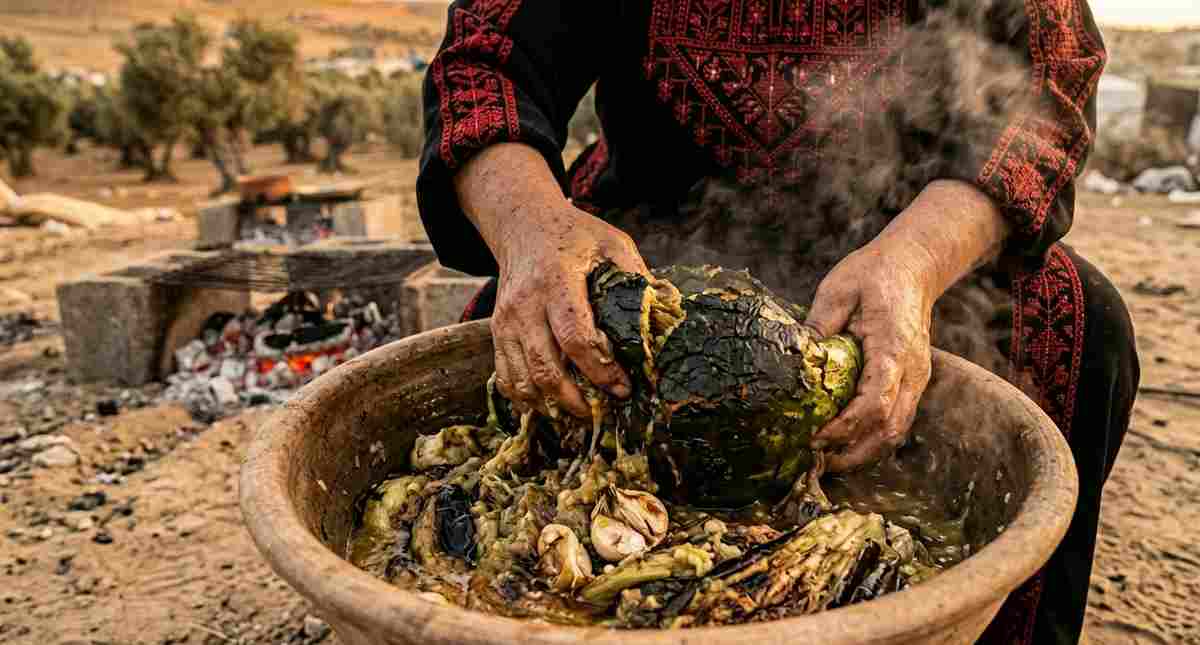
— hands-on preparation is essential.
What Does Lasima Taste Like?
First-time eaters always feel shocked — there is no watermelon sweetness at all. The roasted flesh takes on a smoky, almost meaty quality. The garlic and olive oil add richness, while the roasted eggplant contributes creaminess.
The texture is rustic and chunky, not smooth like baba ganoush. Locals say “Lasima should look like it was crushed by hand, not blended by a machine.”
History and Cultural Significance
Lasima originated in the Gaza Strip, where resources have historically been limited. Gazan cooks learned to use every ingredient — including unripe watermelons that fell from vines before maturing.
The dish represents sumud (steadfastness) — the Palestinian concept of resilience through creativity and community. Today, people enjoy Lasima as a seasonal summer dish across Gaza, from Beit Lahia to Khan Younis.
For more on Palestinian food heritage, check out Middle East Eye’s guide to Palestinian cuisine.
Where to Try Lasima in Gaza
Gaza Strip (Palestine): Look for home kitchens during summer months (June-August) — they offer the most authentic experience.
Gaza City restaurants: Al-Mathaf Restaurant and Roots Hotel Restaurant sometimes feature Lasima as a traditional starter.
Jabalia refugee camp: Known for some of the best homemade Lasima.
Travel tip: Due to travel restrictions, your best chance is connecting with Palestinian food bloggers or cultural organizations that offer virtual cooking classes featuring Lasima.
For other worldwide extreme foods, read about fried tarantula in Cambodia or balut fertilized duck egg.
Key Takeaways:
• Lasima (also called Ajar) is a savory roasted unripe watermelon dish from Gaza, Palestine
• Flavor: smoky, earthy, savory, umami — zero sweetness, completely transformed fruit
• Texture: rustic, chunky, intentionally messy — mashed by hand, not blended
• Key ingredients: unripe watermelon, roasted eggplant, garlic, tomatoes, olive oil, salt
• Cultural meaning: represents sumud (Palestinian resilience and resourcefulness)
• Season: best enjoyed in summer months (June-August) when watermelons are abundant
• Where to try: Gaza City restaurants (Al-Mathaf, Roots Hotel) or home kitchens
• Served with: fresh khubz (flatbread) for dipping or as a side to grilled meats
Ready to try Gaza’s most surprising savory watermelon dish?
Follow EatSleepPush for more extreme food guides from around the world.