

Walk into any Filipino kitchen, and you’ll find two fragrant staples: Bagoong and Patis. These fermented seafood products are the savory base of Filipino cooking. They act as secret weapons that add depth, richness, and a uniquely Filipino flavor to countless dishes. So what’s the difference? Bagoong is a fermented paste made from shrimp or fish. Patis, on the other hand, is the clear amber liquid from the same fermentation process. In short, patis is the Filipino version of fish sauce.
Bagoong Alamang comes from tiny shrimp or krill. This variety has a milder taste and is slightly sweet when you sauté it. People often use it for Kare-Kare, Pinakbet, and as a dipping sauce with green mango.
Bagoong Isda, however, is made from fish (typically anchovies). This type has a stronger, fishier flavor. It works best for hearty stews.
Both products come from lactic acid fermentation. This is an ancient way of preserving food.
For those interested in other Filipino foods, try balut (fertilized duck egg) or durian, the King of Fruits.
Want to learn more about Filipino food culture? Read National Geographic’s article on Filipino cuisine or explore BBC’s feature on bagoong.
💡 Key Insight: Bagoong and patis come from the same fermentation process. Patis is the liquid that drains off, while bagoong is the solid fermented paste. Raw bagoong can be very strong. However, sautéing it mellows the flavor into a versatile condiment.
Best Brands and Where to Buy
Top brands in the Philippines:
- Barrio Fiesta (Sautéed Bagoong Alamang — ₱80-150) — best for Kare-Kare
- Rufina Patis (₱50-100) — best all-purpose fish sauce
- Dizon Farm (Premium Bagoong Balayan — ₱150-300) — artisanal choice
- Marby’s (₱40-80) — good for everyday cooking
- Pampanga’s Best — sweet-style, milder for beginners
Where to buy in the Philippines: SM Supermarket, Puregold, Robinsons Supermarket, local public markets, Shopee Philippines, and Lazada.
International (online): Amazon (Barrio Fiesta $8-15, Rufina $10-18), Weee! (US, $5-12), The Filipino Grocery (UK, £6-15).
For other Southeast Asian condiments, read about bagoong and patis recipes.
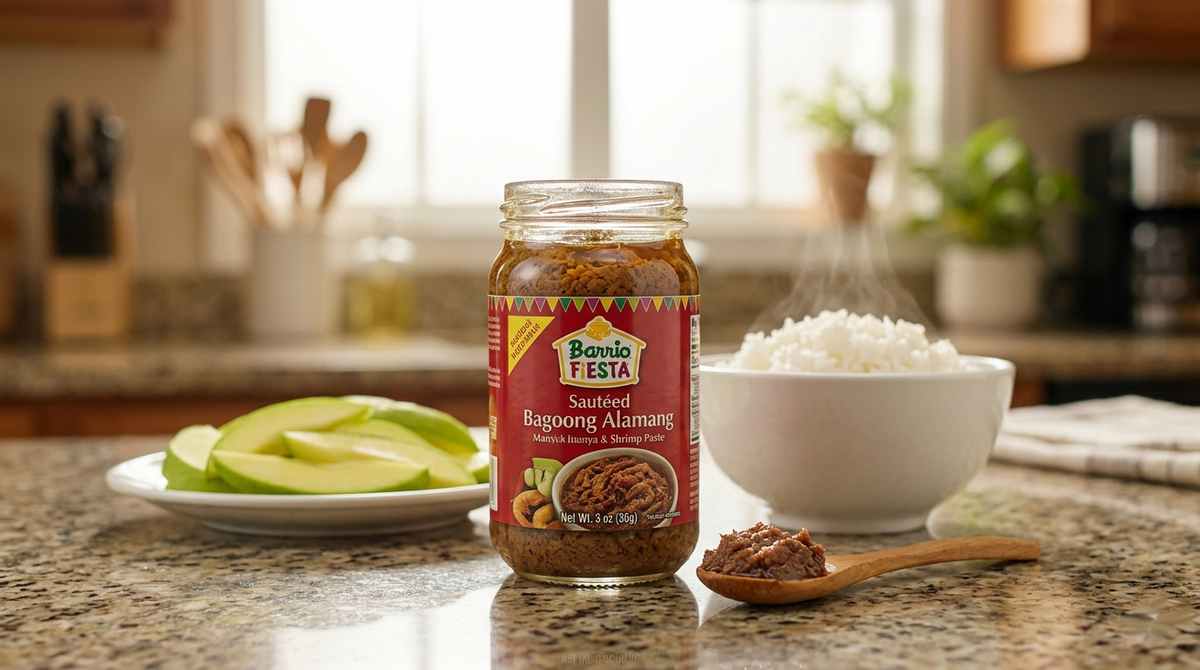
Barrio Fiesta bagoong alamang and Rufina patis — popular Filipino condiment brands.
How to Use Bagoong
- As a flavor base for stews: For example, Kare-Kare (oxtail peanut stew), Pinakbet (vegetable stew), and Binagoongan (pork or eggplant).
- As a sautéed condiment (ginisaang bagoong): First, sauté garlic and onion. Then add bagoong and sugar. Cook for 5-7 minutes.
- As a dipping sauce: Mix it with calamansi and chili. This pairs well with fried fish or grilled meat.
How to Use Patis
- As a soup seasoning: Use it in Sinigang, Tinola, or Nilaga.
- As a dipping sauce base: Mix patis with calamansi and sliced chilies. This is a universal Filipino dipping sauce.
- As a table condiment: Drizzle it over rice or adjust the seasoning of your dish.
Patis-calamansi dipping sauce recipe: Mix 3 tablespoons of patis with 2 tablespoons of calamansi juice and 2-3 sliced bird’s eye chilies. Serve with grilled meats, fried fish, or lumpia.
For more information on fermented foods and food safety, check out WHO’s food safety guidelines.
Key Takeaways:
• Bagoong is a fermented seafood paste (shrimp or fish); patis is the Filipino version of fish sauce
• Bagoong Alamang (shrimp) — milder flavor, great for Kare-Kare and green mango dipping
• Bagoong Isda (fish) — stronger and fishier, best for hearty stews
• Top brands include Barrio Fiesta for bagoong and Rufina for patis
• Price range: ₱40–150 in the Philippines ($1–3 USD), $5–18 internationally
• Always sauté bagoong to mellow its flavor, and store it in the refrigerator after opening
Ready to Cook with Bagoong and Patis?
Follow EatSleepPush for more Filipino food guides and recipes.