

High in the thin air of the Himalayan plateau, a unique beverage is the cornerstone of daily life. Yak Butter Tea (Po Cha in Tibetan) is not your typical cup of tea. It’s a rich, savory, salty, and creamy drink that fuels Tibetan nomads, monks, and travelers alike. For those who brave the experience, it becomes unforgettable — a warm, nourishing embrace that tells the story of one of the world’s most resilient cultures.
Yak butter tea is made from three core ingredients: strong tea base (brick Pu-erh style, boiled for hours), yak butter (rich, aromatic, slightly gamey), and salt (balances bitterness, replenishes electrolytes). These ingredients are churned vigorously in a dongmo (traditional churn) until smooth and creamy — resembling a thin, savory soup. Yak butter tea contains up to 250 calories per cup — essential for survival in the harsh Himalayan climate where temperatures can drop below -30°C.
For those interested in other unique Himalayan beverages, try Dawa cocktail from Kenya or durian, the King of Fruits.
Want to learn more about Tibetan food culture? Read National Geographic’s article on Tibetan cuisine or explore BBC’s feature on yak butter tea.
Key Insight: The taste is savory, salty, creamy, and earthy — resembling a light, salted broth more than typical tea. Many find it an acquired taste, but it grows on you with each sip.
Where to Try Yak Butter Tea
Tibet (most authentic): Lhasa — Jokhang Temple area street stalls (¥10–20) or Ganggyan Tea House (¥5–15). Nomad tents in Everest region offer the most authentic experience (¥20–40 or offered free).
Nepal: Kathmandu — Boudhanath Stupa area Tibetan cafes (₹100–200 NPR). Everest Region teahouses (Namche Bazaar — ₹200–400).
Bhutan: Thimphu local tea houses (Nu 50–100) — similar suja style.
India: McLeod Ganj (Dharamshala) Tibetan cafes (₹50–100 INR), Leh (Ladakh) — local gur gur cha (₹40–80).
Best time to visit: May–October for accessible weather.
For other traditional recipes, read about bagoong and patis from the Philippines.
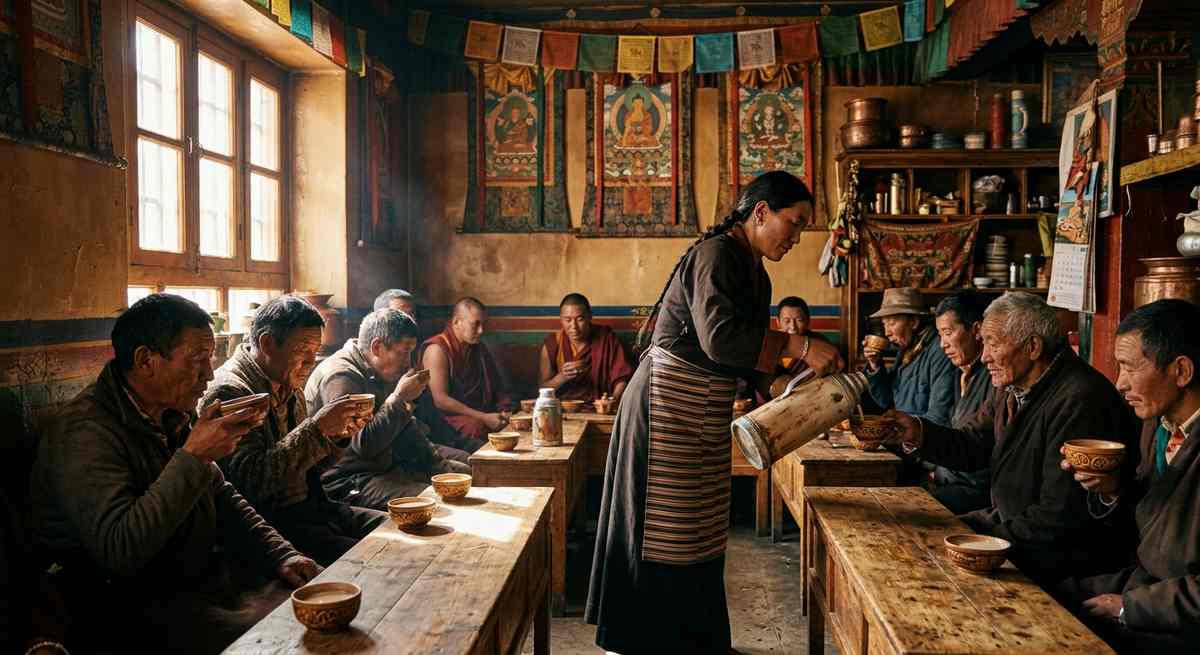
Traditional tea house near Jokhang Temple in Lhasa serving authentic yak butter tea.
How to Make Yak Butter Tea at Home
Ingredients: 2 tbsp Pu-erh tea (loose leaf or brick), 4 cups water, 2-3 tbsp unsalted butter (cow butter is closest substitute), 1/4 tsp salt (Tibetan or Himalayan pink salt preferred), 1/4 cup milk optional for creamier texture.
Instructions: Brew strong tea — simmer Pu-erh for 10-15 minutes until dark and concentrated. Strain leaves. Combine: pour hot tea into a blender, add butter, salt, and optional milk. Blend on high for 30-60 seconds until frothy and emulsified. Serve immediately — it will separate if left to cool.
Tips for first-time drinkers: Go in with an open mind (it’s not sweet tea), sip slowly (warmth is part of the experience), don’t judge by first sip (many need 2-3 sips to appreciate it), pair with tsampa (roasted barley flour) for the full Tibetan food experience.
For more information on traditional beverages and food safety, check out WHO’s food safety guidelines.
Key Takeaways:
• Yak butter tea (Po Cha) is a savory, salty, creamy drink from Tibet — up to 250 calories per cup
• Ingredients: Pu-erh tea, yak butter (or cow butter substitute), salt — churned until emulsified
• Best places: Lhasa (Jokhang Temple area, Ganggyan Tea House), Boudhanath (Kathmandu)
• Price: ¥5–20 in Tibet, ₹100–400 NPR in Nepal, $5–15 in tourist areas
• Served in wooden bowls — accept with both hands as a sign of respect
• Helps with altitude adaptation: warm, salty liquid aids hydration and energy
Ready to Try the World’s Most Unique Tea?
Follow EatSleepPush for more extreme food and drink guides from around the world.