

Witchetty grub — “bush chocolate” — a traditional Aboriginal food source for over 60,000 years.
Deep under Australia’s hot outback soil lives a creature called the witchetty grub. This plump, white larva of the cossid moth is far more than just an insect. For over 60,000 years, Aboriginal Australians have relied on it for survival, culture, and food. Many people affectionately call it “bush chocolate.” These grubs are a classic example of bush tucker. In short, they are native foods that have kept the world’s oldest living culture alive for thousands of generations.
The relationship between Aboriginal Australians and the witchetty grub goes back to the Dreamtime. This is the time when ancestral spirits created the world. For the Arrernte people of Central Australia, the grub appears in their creation stories. Interestingly, these stories also teach important knowledge. For example, they show where to find the grub and how to harvest it respectfully.
What exactly is a witchetty grub? It is the young stage of the Cossid Moth. This insect lives for several years underground. During that time, it feeds on the sap-filled roots of witchetty bushes (called Acacia kempeana) and river red gums. Traditional harvesting uses a digging stick called a wana. Harvesters carefully remove the grubs without damaging the plant. This shows a deep understanding of nature. As a result, grubs have remained plentiful for thousands of years.
For those interested in other traditional Indigenous foods, read about escamoles from Mexico or ackee from Jamaica.
Want to learn more about Aboriginal bush tucker? Read National Geographic’s article on bush food or explore BBC’s feature on witchetty grubs.
Key Insight: Raw witchetty grubs taste creamy and nutty with almond notes. The texture is similar to soft-scrambled eggs or rich custard. There is no unpleasant “insect” flavor at all.
Taste, Texture, and How They’re Eaten
The most traditional way to eat witchetty grubs is raw and fresh from the ground. Here’s how: you bite off the head and squeeze the creamy contents into your mouth. The texture is creamy and slightly soft. Many say it feels like soft-scrambled egg or custard. The taste is mild and nutty with notes of almond. Meanwhile, the skin gives a slight crunch.
When cooked in hot campfire ashes, the skin becomes crisp and golden brown. This reminds some people of chicken skin. The inside becomes warm and creamy. At the same time, the nutty flavor becomes stronger. People often compare it to roasted peanuts or scrambled eggs cooked in butter. Some modern Australian chefs pan-fry them with native spices. For example, they use ingredients like wattleseed and lemon myrtle.
For other unique edible insects, try scorpion on a stick.
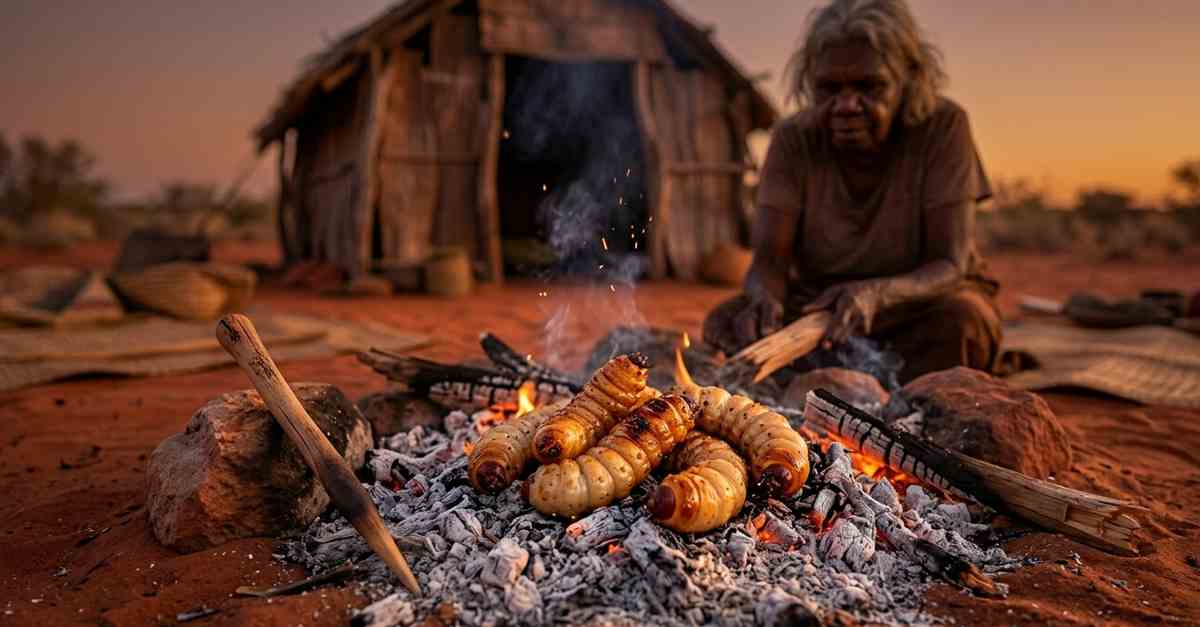
Traditional preparation — witchetty grubs roasted in hot campfire ashes until the skin turns golden brown.
Why Witchetty Grubs Are a Superfood
The witchetty grub is packed with nutrition. First, it contains complete protein with all nine essential amino acids. Second, it is rich in healthy fats, including oleic acid. (This is the same healthy fat found in olive oil.) Third, it has more iron than lean beef. Finally, it also provides zinc, calcium, and B vitamins. Moreover, this grub is a sustainable choice. It needs very little water and land. It also produces low greenhouse gases. Therefore, it is an eco-friendly alternative to traditional meat.
Where to Try Witchetty Grubs
For visitors, the best way is through Aboriginal-led cultural tours. You can find these in Central Australia, around Alice Springs and Uluru. Knowledge Holders will show you traditional harvesting and preparation methods. This is the most respectful and authentic way to try them. Alternatively, modern Australian restaurants in major cities also serve witchetty grubs on their menus.
As Indigenous chef Mark Olive says: “Bush tucker teaches us that wonderful flavors come straight from the land. They are prepared with knowledge perfected over thousands of generations.”
For more information on sustainable protein sources, check out WHO’s food safety guidelines.
Key Takeaways:
• Witchetty grubs are cossid moth larvae — an Aboriginal food for 60,000+ years
• Raw taste: creamy, nutty, with almond notes — no “insect” flavor
• Cooked in ashes: crispy skin, warm creamy inside, like roasted peanuts
• Nutritional powerhouse: complete protein, healthy fats, iron, zinc, calcium
• Sustainable protein source — needs very little water and land
• Best experienced through Aboriginal-led cultural tours in Central Australia
Ready to Try Bush Chocolate?
Follow EatSleepPush for more extreme food guides from around the world.