
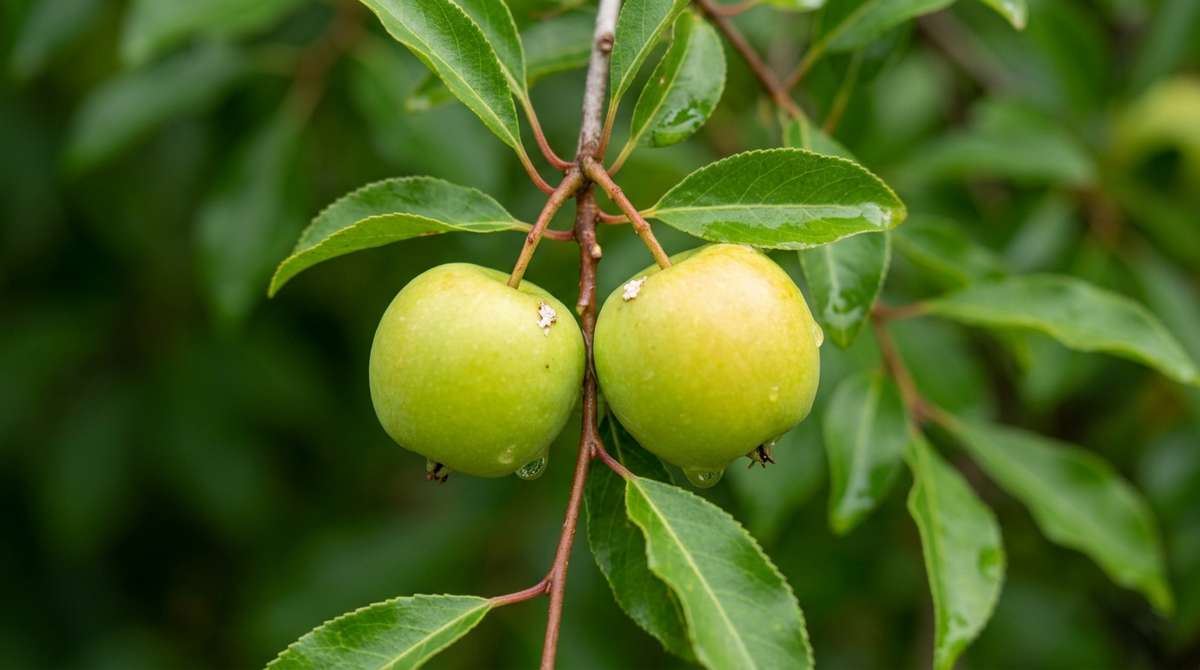
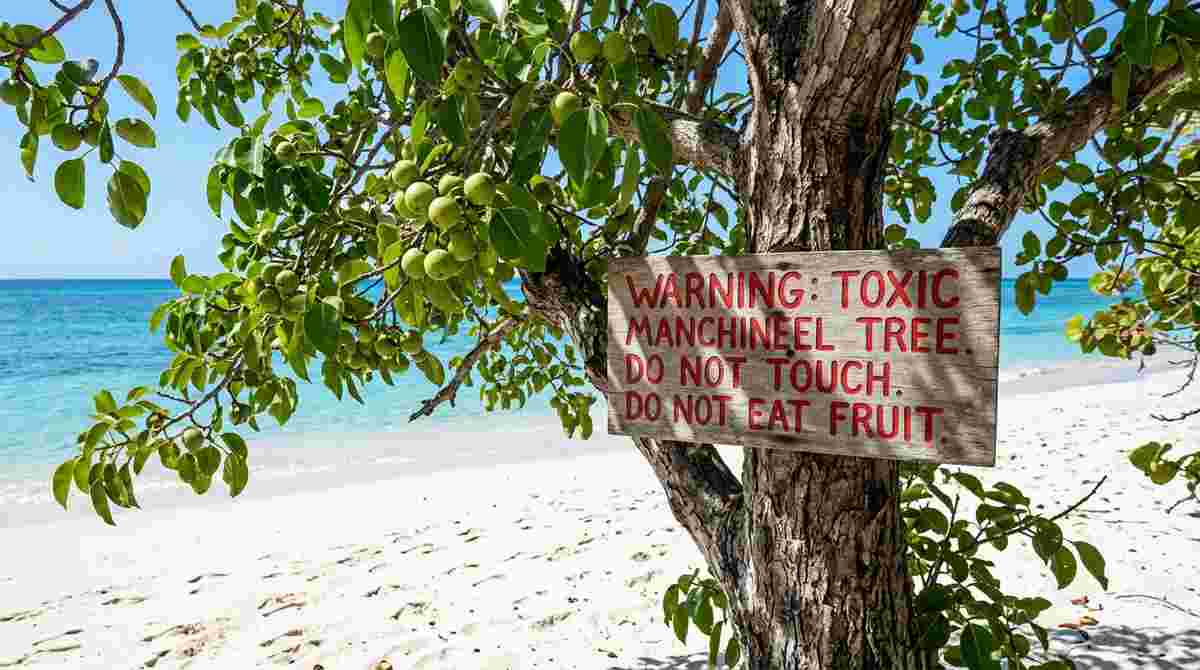
The manchineel tree — deceptively beautiful but the world’s most dangerous tree, found on Caribbean beaches.
Picture this: you’re walking along a beautiful Caribbean beach. You spot a tree with sweet-smelling, apple-like fruits. But this innocent-looking tree is actually dangerous. It’s called the manchineel (Hippomane mancinella). The Guinness World Records calls it the world’s most dangerous tree. Every part of this plant contains strong poisons. These toxins can cause severe burns, blindness, and even death. Locals call it the “beach apple” or “death apple.” It’s nature’s way of saying: looks can be deceiving.
The tree’s Spanish name is manzanilla de la muerte, which means “little apple of death.” Indigenous Carib and Arawak peoples used the sap to poison their arrows. Spanish explorers in the 16th century learned about its dangers the hard way. Several historical accounts describe sailors who ate the fruit and died painful deaths.
The tree contains two main toxins: phorbol and hippomanin. These poisons are in every part of the tree. For example, the sap is extremely burning to the skin. The fruit looks like small green apples. The leaves, bark, and wood are also toxic.
For those interested in other dangerous natural phenomena, read about Jamaica’s toxic ackee fruit or durian, the spiky King of Fruits.
Want to learn more about the world’s deadliest plants? Read National Geographic’s article on manchineel or explore BBC’s feature on the beach apple.
Key Insight: Rainwater running off manchineel leaves carries enough toxin to burn anyone standing under the tree during a rain shower.
The Dangers and How to Identify It
Skin contact causes immediate burning, severe blisters, and painful swelling.
Eating the fruit is extremely dangerous. Even a small piece can cause burning mouth pain and bleeding in the stomach. The throat can swell, which may cause suffocation. Without immediate treatment, it can lead to organ failure and death.
Eye contact is also very dangerous. Smoke from burning wood can cause temporary or permanent blindness.
How to identify the tree: It grows 15-50 feet tall. The bark is gray to reddish-brown. The leaves are glossy green and oval-shaped. The fruit looks like small greenish-yellow “apples” (1-2 inches wide). You can find it on Caribbean beaches, in mangrove swamps, southern Florida, Central America, and northern South America.
For other Caribbean natural wonders, learn about witchetty grubs in Australian Aboriginal culture.
Manchineel fruit — the “beach apple” or “death apple” — deceptively sweet-smelling but deadly toxic.
Safety Guide for Travelers
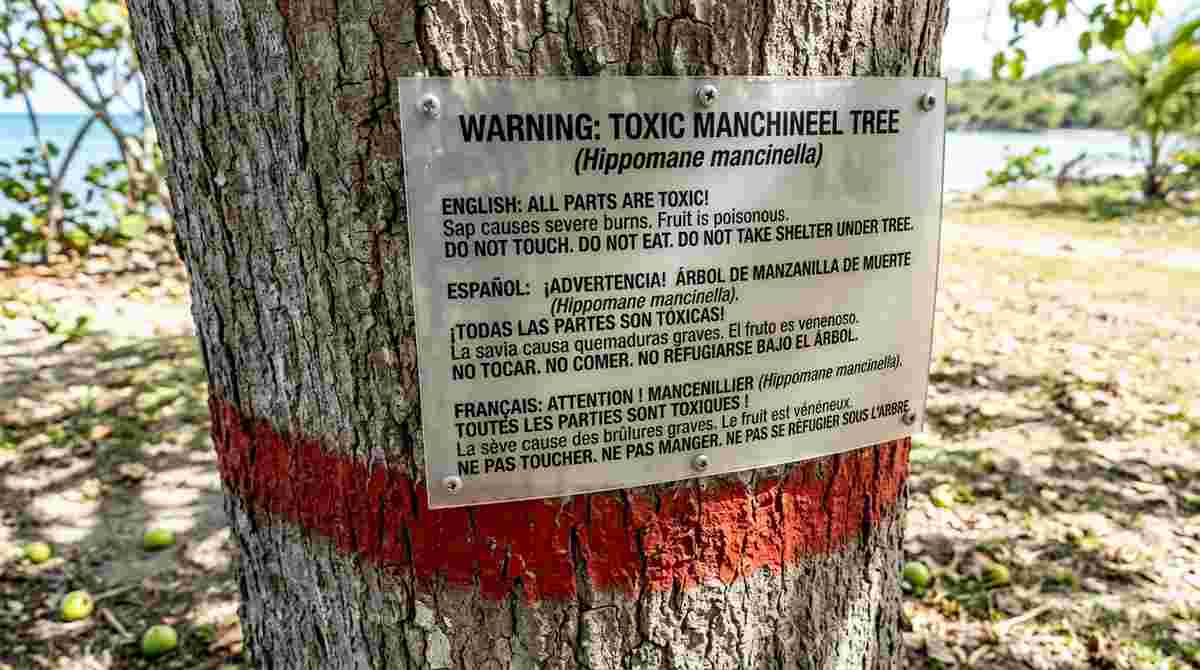
Many Caribbean destinations mark manchineel trees clearly. Look for red paint rings around the trunk. You’ll also see warning signs in several languages.
Emergency procedures:
- Skin contact: Wash immediately with soap and water. Then seek medical attention.
- Eye exposure: Rinse with clean water for 15-20 minutes. Then seek emergency care.
- Ingestion: Go to the nearest hospital immediately. If possible, bring a sample of the plant.
Despite its dangers, the manchineel tree plays an important role in nature. It helps stabilize sand dunes, which protects the coast. Some animals can eat the fruit without harm, so it provides wildlife habitat.
For more information on plant safety and first aid, check out WHO’s food safety guidelines.
Key Takeaways:
• Manchineel is the world’s most dangerous tree (Guinness World Record)
• It contains phorbol and hippomanin toxins in every part — sap, fruit, leaves, bark, and wood
• Skin contact causes burns and blisters; eating the fruit can be deadly
• Rainwater running off the leaves can burn your skin
• Smoke from burning wood can cause blindness
• Found on Caribbean beaches, southern Florida, Central and South America
• Look for red paint rings and warning signs in tourist areas
Ready to Learn About Nature’s Deadliest Plant?
Follow EatSleepPush for more extreme food and nature guides from around the world.