
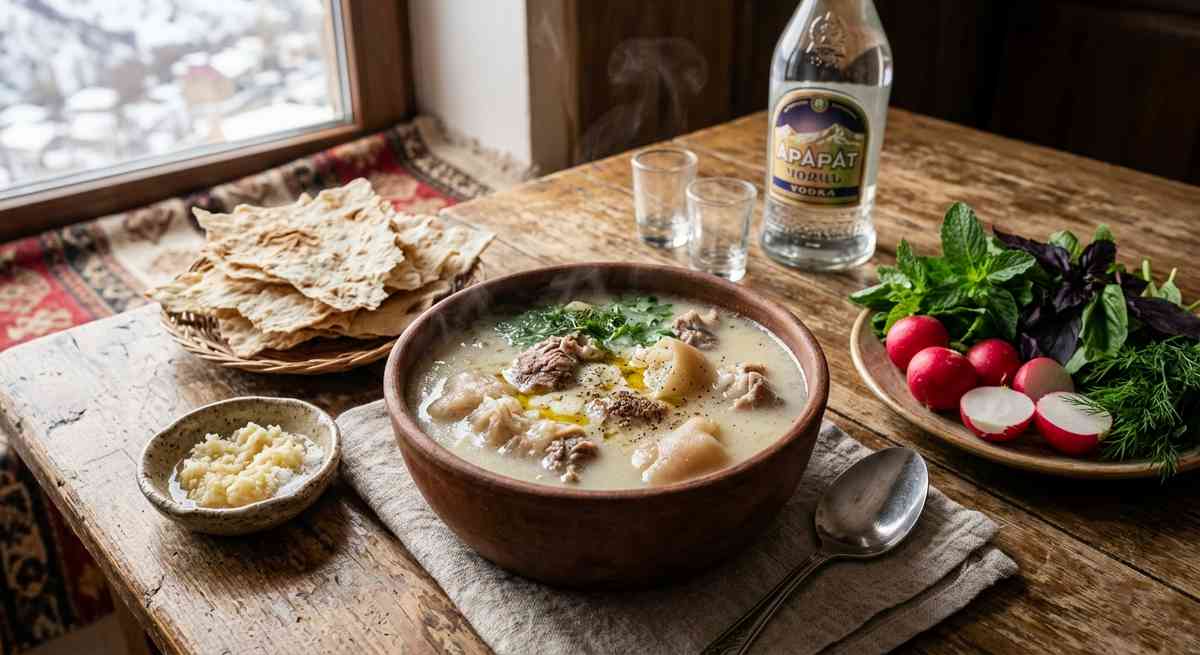
Khash — a traditional Middle Eastern soup made from sheep’s head and trotters, served with garlic, dried lavash, and fresh herbs.
In the heart of the Middle East, the Caucasus, and the Balkans, there is a very old food tradition. It crosses modern borders and connects many cultures. This is Khash (also known as Kalleh Pacheh in Iran, Pacha in Iraq, or İşkembe in Turkey). It’s a rich, thick soup made from sheep’s head, feet, and sometimes stomach. Khash is more than just a meal. It’s a winter ritual and a perfect example of the nose-to-tail way of eating.
Khash has a long history that goes back to ancient pastoral traditions. It came from necessity and saving money among shepherds. When a family slaughtered a sheep, they wasted nothing. Instead, they turned the head and feet into a nourishing dish for the whole community. The name comes from the Armenian verb “khashél” which means “to boil.” You can find references to Khash in ancient Armenian and Persian texts. Medieval physicians praised its nutritional value. Several cultures claim Khash as their own. These include Armenians, Iranians, Turks, Azerbaijanis, Afghans, Albanians, and Georgians. Each group adds its own small regional twist to the recipe.
For those interested in other Middle Eastern delicacies, try sheep eyeballs or lamb brain (mokh).
Want to learn more about ancient Middle Eastern cuisine? Read National Geographic’s article on ancient food traditions or explore BBC’s feature on khash.
Key Insight: People season the broth with nothing more than salt during the final cooking. The complex flavor comes entirely from slow-cooking bones, skin, and connective tissues until they turn into a milky, rich liquid.
The Ritual of Preparation
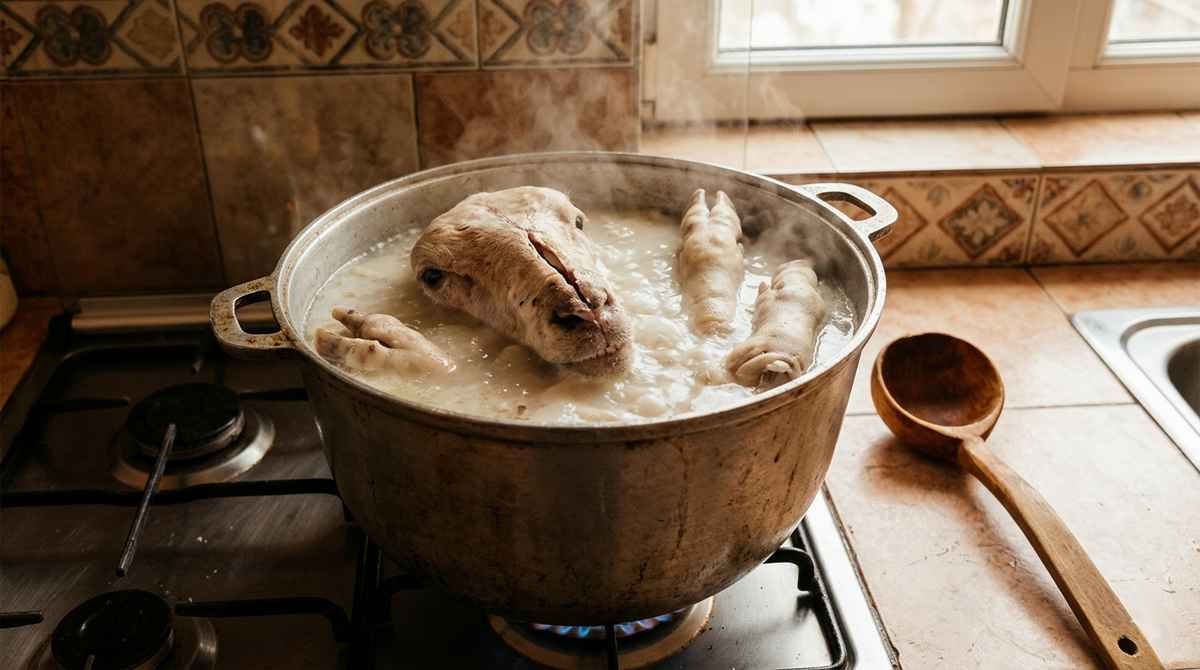
Preparing Khash takes time — it demands patience. First, cooks clean the head and feet carefully. They singe off the hair, scrape the feet, and soak everything in water with vinegar for hours.
Then they place the parts in a large pot. They cover them with cold water and let them simmer for 6-8 hours, often overnight. The result is a rich, creamy, very savory broth. The meat becomes so tender it falls right off the bone.
The Eating Ceremony
People traditionally eat Khash as a winter breakfast dish. They believe it provides warmth and energy. Many also enjoy it as a hangover cure. The eating ceremony is very social. Restaurants serve Khash piping hot in deep bowls. It comes with several traditional accompaniments:
- Crushed garlic — mix it with broth for a pungent kick
- Dried lavash bread — break it into the soup
- Salt and fresh herbs — like mint, basil, and tarragon
- Radishes — for a crisp, fresh contrast
- Vodka or raki — to cut through the richness
For other traditional winter dishes, read about yak butter tea from Tibet.
A traditional Khash breakfast spread — broth, dried lavash, garlic paste, radishes, fresh herbs, and vodka.
Cultural Significance
Khash is deeply woven into the social fabric of many cultures. In Armenia, people see it as a dish of friendship and trust. Men often enjoy it at all-male gatherings, especially to celebrate the first snowfall. In Iran, Kalleh Pacheh is a beloved late-night or pre-dawn meal. Despite its humble origins, Khash represents resourcefulness, resilience, and connection to the land.
Regional Variations of Khash
- Armenia: The name “khashél” means “to boil” — traditional winter breakfast
- Iran: Kalleh Pacheh — served late-night or pre-dawn with warm flatbread
- Turkey: İşkembe — often includes tripe and served with garlic vinegar
- Iraq: Pacha — similar preparation, sometimes with rice
In a world of fast food, the slow, careful process of making and eating Khash feels like a form of meditation through food.
For more information on traditional soups and food safety, check out WHO’s food safety guidelines.
Key Takeaways:
• Khash is a thick soup made from sheep’s head, feet (trotters), and sometimes stomach
• The name comes from Armenian “khashél” meaning “to boil” — ancient texts mention it
• Cooks simmer it for 6-8 hours (often overnight) — they add only salt at the end
• People eat it as a traditional winter breakfast, also popular as a hangover cure
• Serve it with crushed garlic, dried lavash bread, fresh herbs, radishes, and vodka or raki
• Many cultures claim Khash: Armenians, Iranians, Turks, Azerbaijanis, Afghans, Albanians, and Georgians
Ready to Try This Ancient Winter Ritual?
Follow EatSleepPush for more extreme food guides from around the world.