
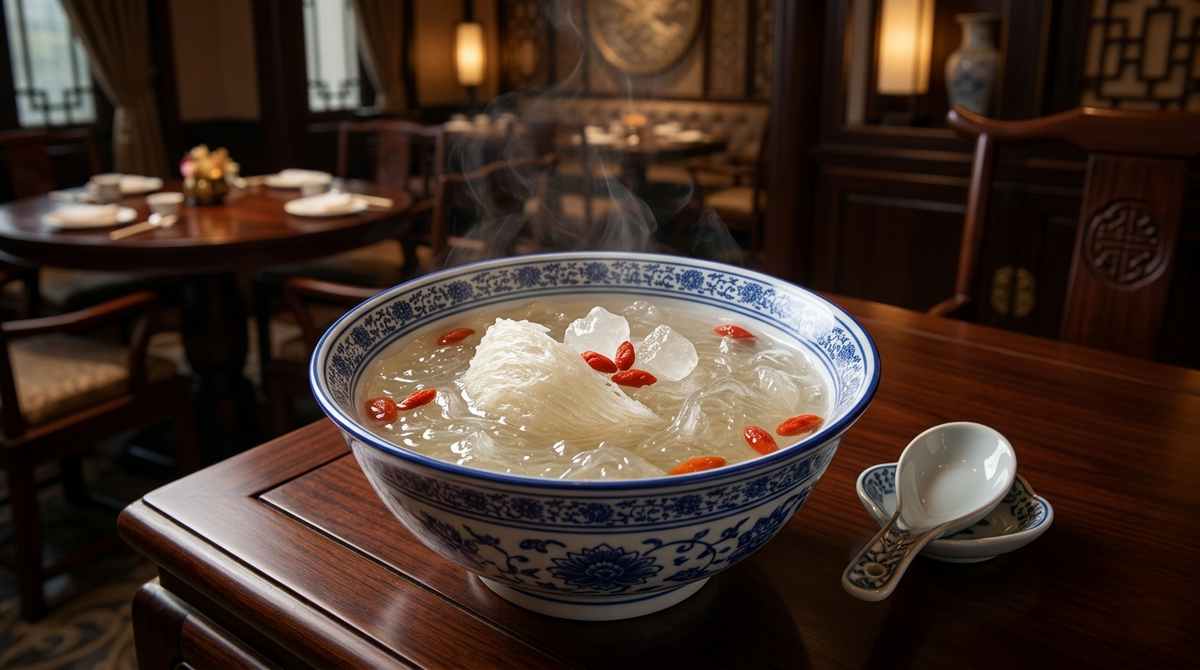
Bird’s Nest Soup — a see-through, jelly-like delicacy made from swiftlet saliva nests, served with rock sugar and goji berries.
In the world of luxury foods, few items have the mystery and high price of Bird’s Nest Soup (燕窝, yàn wō). This see-through, jelly-like delicacy comes from the hardened saliva nests of swiftlets (a type of small bird). Chinese culture has honored it for centuries as the ultimate luxury food and a powerful health tonic. The finest white nests can cost up to $3,000 per kilogram. This makes it one of the most expensive animal products that humans eat.
Small birds from the swiftlet family (Aerodramus and Collocalia) create these nests. During breeding season, their salivary glands grow larger. They produce a thick, sticky substance and deposit it onto cave walls. The substance then hardens into crescent-shaped nests. The most prized nests are white nests (pure saliva) and red nests (stained by minerals from cave walls). Red nests command the highest prices. The tradition of eating bird’s nest soup dates back to China’s Tang Dynasty (618-907 AD). It became firmly established as an imperial delicacy during the Ming and Qing Dynasties. Admiral Zheng He often gets credit for popularizing it in the 15th century.
For those interested in other Chinese delicacies, try century egg (pídàn) or Tong Zi Dan (virgin boy eggs).
Want to learn more about this luxury delicacy? Read National Geographic’s article on bird’s nest soup or explore BBC’s feature on edible nests.
Key Insight: The taste is very delicate, mild, and almost unnoticeable — like egg white or gelatin. The true magic lies in the texture: silky, smooth, and slightly jelly-like. People often describe it as “slippery” on the tongue.
How Harvesters Collect Bird’s Nests
Traditionally, harvesters collect nests from sheer, dark limestone caves. The Gomantong Caves in Malaysian Borneo are a famous example. Workers use bamboo poles and vine ropes at heights over 60 meters (200 feet). This is one of the world’s most dangerous jobs.
How Workers Clean and Prepare the Nests
Cleaning raw nests is incredibly hard work. Raw nests are filled with feathers and dirt. A skilled worker might spend an entire day cleaning just 8-10 nests. They use small tweezers under bright lights. After cleaning, they double-steam the nest with rock sugar to make a silky broth.
Health Claims and Scientific Evidence
In Traditional Chinese Medicine (TCM), people believe Bird’s Nest Soup offers many benefits. For example, it is said to strengthen the immune system (qi), improve complexion, and slow aging. These benefits supposedly come from its glycoproteins and sialic acid (a substance also found in human breast milk). However, scientific consensus says that while the soup is nutritious, the extraordinary health claims lack strong Western clinical evidence.
For other controversial luxury foods, read about Kopi Luwak (civet coffee) from Indonesia.

Nest collectors in Gomantong Caves, Borneo — one of the world’s most dangerous professions.
The Dark Side of the Industry
The huge value of bird’s nests has created a shadow economy. Problems include:
- Adulteration and fraud: Sellers add red seaweed, gum, pork skin, or white fungus to increase weight
- Theft and smuggling: Violent conflicts occur between harvesters and poachers
- Sustainability concerns: Illegal over-harvesting before chicks leave the nest threatens swiftlet populations
As a result, a significant percentage of bird’s nest products on the market are not 100% pure.
Guide to Ethical Consumption
If you want to try bird’s nest soup ethically, follow these tips:
- Purchase from established, reputable dealers in Hong Kong or Singapore who provide traceability
- Learn the grades — premium white nests are cleaner
- Consider ready-to-eat bottled versions from trusted brands
- Acknowledge that you are paying for an ancient cultural experience and labor
For more information on luxury foods and ethical consumption, check out WHO’s food safety guidelines.
Key Takeaways:
• Bird’s Nest Soup comes from swiftlet saliva nests — up to $3,000 per kilogram
• Swiftlets build nests from hardened saliva; white and red nests are most prized
• Taste: very mild, delicate, like egg white — texture is silky, smooth, and jelly-like
• Harvesters collect nests from dangerous cave climbs (60+ meters) using bamboo poles
• Cleaning is very labor-intensive: 1 day to clean just 8-10 nests with tweezers
• The industry faces problems with fraud, theft, smuggling, and over-harvesting
Ready to Learn About Asia’s Ultimate Luxury Delicacy?
Follow EatSleepPush for more extreme food guides from around the world.