
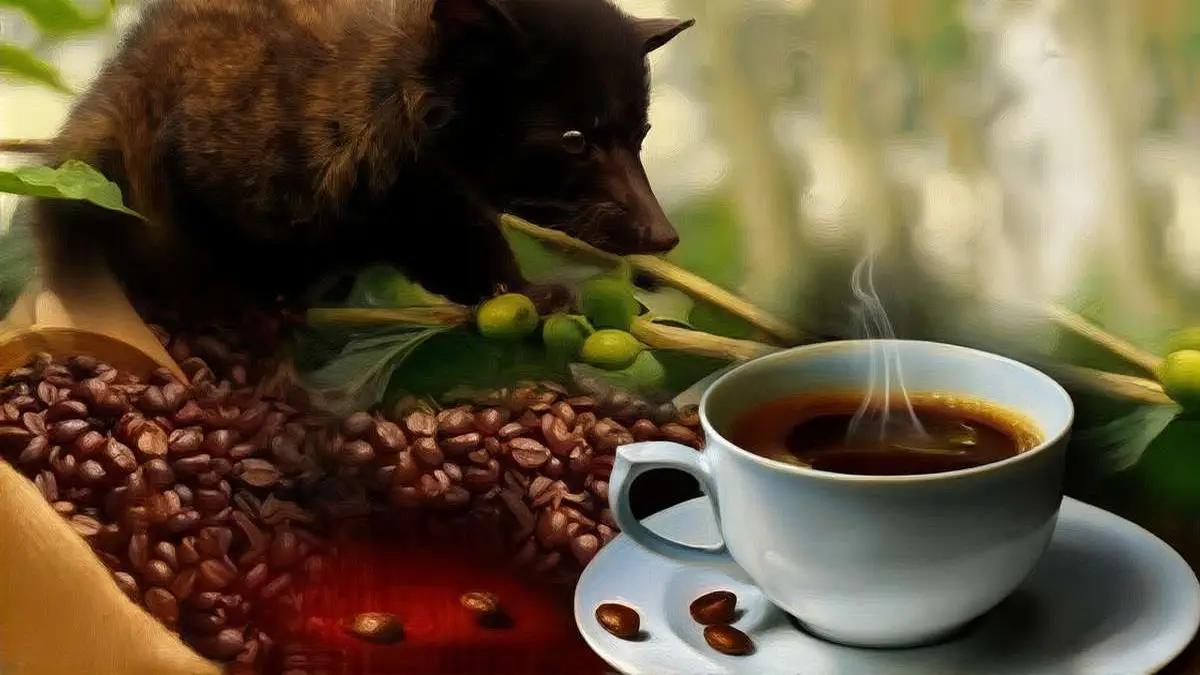
Kopi Luwak — the world’s most expensive coffee, processed through the digestive tract of the Asian palm civet.
In the lush tropical forests of Indonesia, a unique and expensive process happens in the dark. Kopi Luwak (civet coffee) is coffee that has gone through a strange journey. The Asian palm civet (Paradoxurus hermaphroditus) eats the coffee cherries. Then the cherries pass through its digestive system and come out the other end. Coffee experts say the resulting beans make a very smooth cup. It has less acidity and complex flavor notes. The price ranges from $100 to $600 per pound. This makes it the world’s most expensive coffee — a title that brings both prestige and bad reputation.
Kopi Luwak first appeared during Dutch colonialism in Indonesia (18th-19th century). Local farmers could not harvest coffee for themselves. However, they noticed that wild civets would eat the ripest coffee cherries. So resourceful locals collected civet droppings. Then they cleaned and roasted the beans. This created their own coffee supply from an act of necessity. What began as resistance later evolved into a luxury product. The civet’s stomach acids and digestive enzymes break down proteins. These proteins are major sources of bitterness in regular coffee. The process also alters amino acids. As a result, the final brew is notably smooth and full-bodied with reduced acidity.
For those interested in other unique Indonesian products, try durian, Southeast Asia’s King of Fruits or balut in the Philippines.
Want to learn more about this controversial coffee? Read National Geographic’s article on civet coffee or explore BBC’s feature on Kopi Luwak.
Key Insight: The most noticeable characteristic is smoothness. The coffee lacks the sharp, acidic bite of regular coffee. Instead, it has a silky, almost syrupy mouthfeel with notes of chocolate, caramel, and earth.
Three Ways to Produce Kopi Luwak
Wild-collected (the original method): Foragers find civet droppings in the rainforest. This method is labor-intensive and yields small quantities. Importantly, it involves no animal cruelty. However, it is extremely rare.
Semi-wild farms: These are natural enclosures that mimic the forest habitat. The civets eat a varied diet. This provides better animal welfare than caged farms.
Caged battery farms (most common): Civets live in small, barren wire cages. Workers feed them a monotonous diet of only coffee cherries. This leads to malnutrition and stress. Animal welfare organizations like WWF and PETA widely condemn this method.
For other controversial luxury foods, read about Tong Zi Dan (virgin boy eggs) from China.
The Dark Side of Kopi Luwak
Investigations have exposed widespread cruelty. These include injured paws, malnutrition, and high mortality rates among caged civets. Furthermore, experts estimate that a huge percentage of coffee sold as Kopi Luwak is fake. Unscrupulous sellers pass off ordinary coffee as Luwak. Others use beans from caged, sick civets but label them as “wild.”
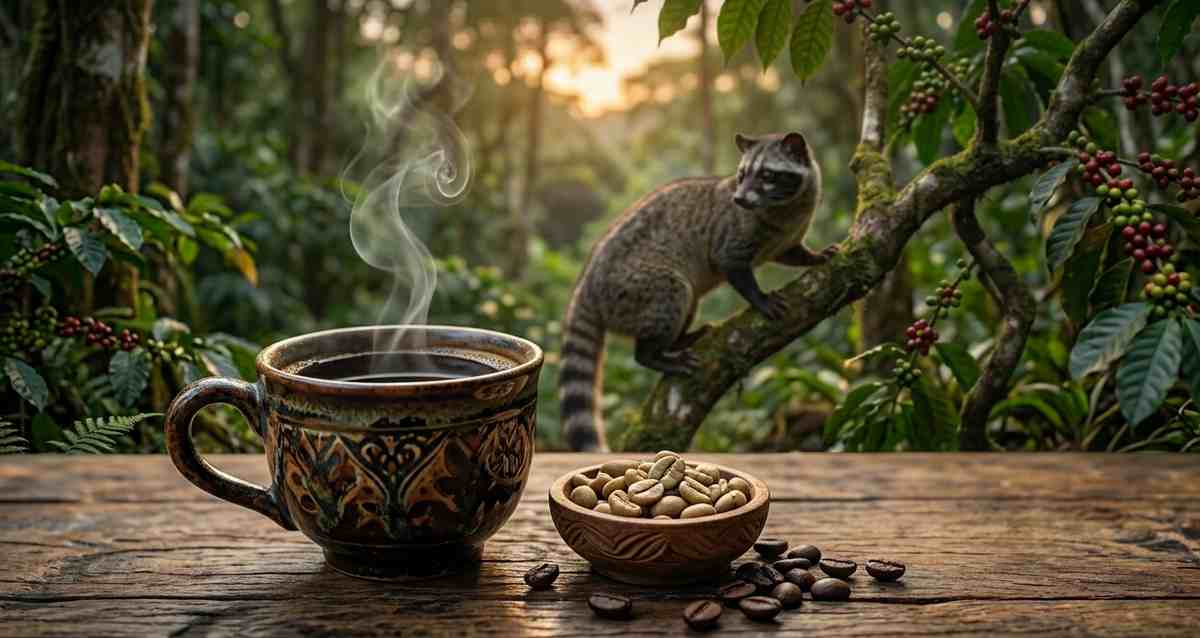
Caged civet farming — the most common and most controversial source of Kopi Luwak, widely condemned by animal welfare organizations.
Guide to Ethical Kopi Luwak Consumption
If you want to try Kopi Luwak, follow these guidelines:
- Prioritize wild-collected: Look for suppliers with verifiable proof that their beans come from the wild. This is the most expensive and rarest option, but it guarantees no animal cruelty.
- Ask critical questions: Where do the beans come from? How do they house the civets? Can they provide evidence (photos, farm audits)? Reputable sellers will answer honestly.
- Be wary of low prices: If a cafe always has Kopi Luwak in stock for $10 a cup, it’s almost certainly fake or from caged civets.
Many coffee experts suggest that money spent on questionable Kopi Luwak is better invested in ethically sourced, single-origin specialty coffees. You can experience incredible diversity while supporting sustainable and humane practices.
For more information on ethical coffee consumption, check out WHO’s food safety guidelines.
Key Takeaways:
• Kopi Luwak is coffee digested and excreted by Asian palm civets — $100-$600 per pound
• Digestive enzymes break down proteins, reducing bitterness and acidity
• Flavor: smooth, silky mouthfeel with chocolate, caramel, and earthy notes
• Three production methods: wild-collected (ethical, rare), semi-wild, caged farms (cruel, common)
• Caged civet farms cause malnutrition, stress, and high death rates
• Much of the market is fake — without reliable certification, you can’t verify authenticity
Ready to Learn About Controversial Delicacies?
Follow EatSleepPush for more extreme food guides from around the world.