

Sannakji — live octopus served fresh, representing Korea’s ultra-fresh seafood tradition.
The plate arrives, and immediately you notice something extraordinary: the pieces of octopus are still moving. Tentacles curl and twist, suction cups grip the plate with determined strength. This is sannakji (산낙지), South Korea’s most thrilling culinary experience — a dish of live octopus that tests both your courage and your chewing skills. More than just a meal, it represents Korea’s deep connection to the sea and a culinary philosophy celebrating ultra-fresh ingredients.
Sannakji’s origins are rooted in Korea’s coastal fishing traditions. Fishermen would eat their catch immediately after pulling it from the sea, valuing unmatched freshness. In Korean culture, it’s considered a health food believed to boost vitality and provide rich protein. The preparation is swift — taking less than five minutes. The chef removes the beak and internal organs, then cuts the tentacles into bite-sized pieces while preserving neuromuscular activity. The moving pieces are drizzled with sesame oil and sprinkled with sesame seeds.
For those who enjoy other Korean specialties, try fugu in Japan or balut in the Philippines.
Want to learn more about this Korean delicacy? Read National Geographic’s article on sannakji or explore BBC’s feature on live octopus.
Key Insight: The suction cups will stick to your mouth — this is normal. Don’t panic, just keep chewing deliberately until the movement stops.
Taste, Texture, and Safety Tips
Tentacles move for 20-30 minutes after preparation. The texture is cool, slippery, chewy, and elastic with a distinct crunch from suction cups. The flavor is clean and briny with mild sweetness, enhanced by sesame oil. However, sannakji carries a choking risk — suction cups can adhere to the throat if not chewed properly. Approximately 6 deaths per year occur in South Korea from sannakji-related choking, mostly among elderly or intoxicated individuals. Proper chewing eliminates virtually all risk.
Essential safety tips: Never eat when intoxicated, take small pieces (no larger than your thumbnail), chew until movement stops, don’t talk while chewing, and have water nearby. High-risk groups (elderly, young children, denture wearers) should avoid.
For other extreme seafood adventures, try fermented shark in Iceland.
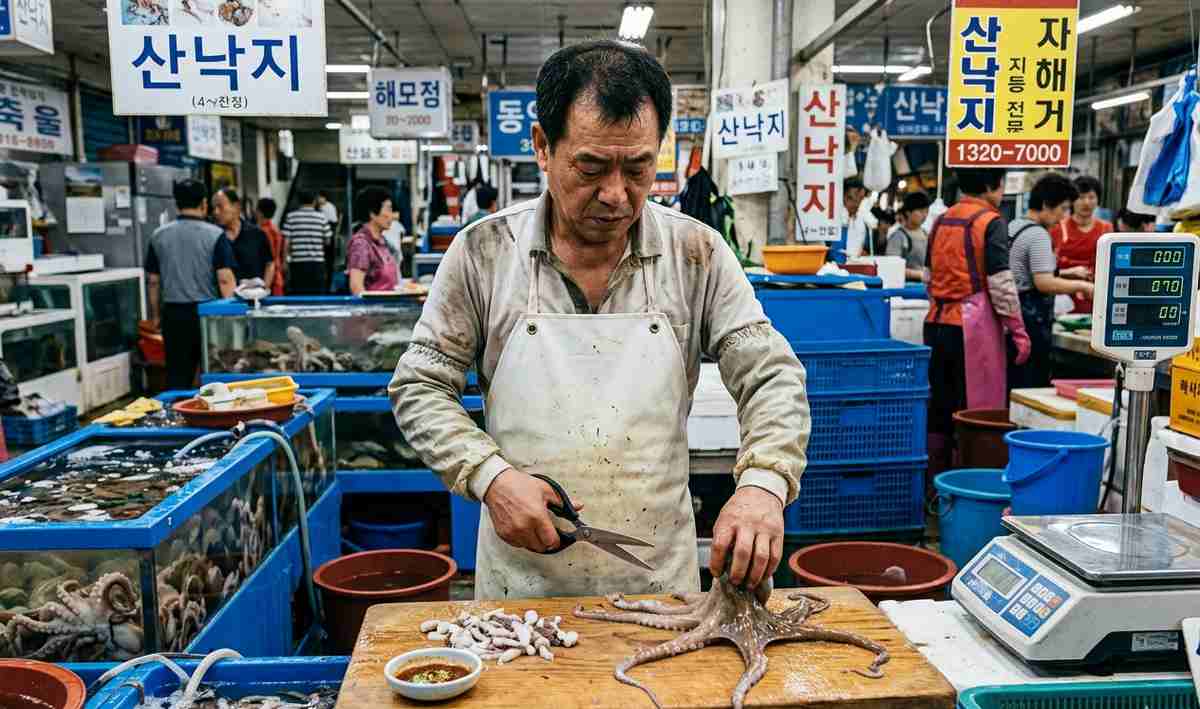
A Korean chef preparing sannakji — the swift, precise process takes less than five minutes.
Where to Experience Sannakji in South Korea
The best places to try sannakji include Noryangjin Fisheries Wholesale Market in Seoul (the ultimate experience — choose your octopus live and eat immediately), Gwangjang Market with dedicated stalls, and Jagalchi Market in Busan, Korea’s largest fish market.
Price ranges from ₩15,000-₩40,000 ($12-$35 USD), typically including side dishes (banchan) and soju. The dish faces ethical scrutiny from animal rights advocates. Many restaurants now ensure swift, humane dispatch and offer alternative prepared octopus dishes for those uncomfortable with eating live animals.
For more information on seafood safety, check out WHO’s food safety guidelines.
Key Takeaways:
• Sannakji is live octopus served immediately after preparation
• Tentacles move for 20-30 minutes — chew thoroughly to prevent choking
• Flavor is clean, briny, and mild with a chewy, elastic texture
• Approximately 6 choking deaths per year in South Korea (mostly elderly/intoxicated)
• Best experienced at Noryangjin Market (Seoul) or Jagalchi Market (Busan)
• Price: ₩15,000-₩40,000 ($12-$35 USD)
Ready to Try Sannakji?
Follow EatSleepPush for more extreme food guides from around the world.