
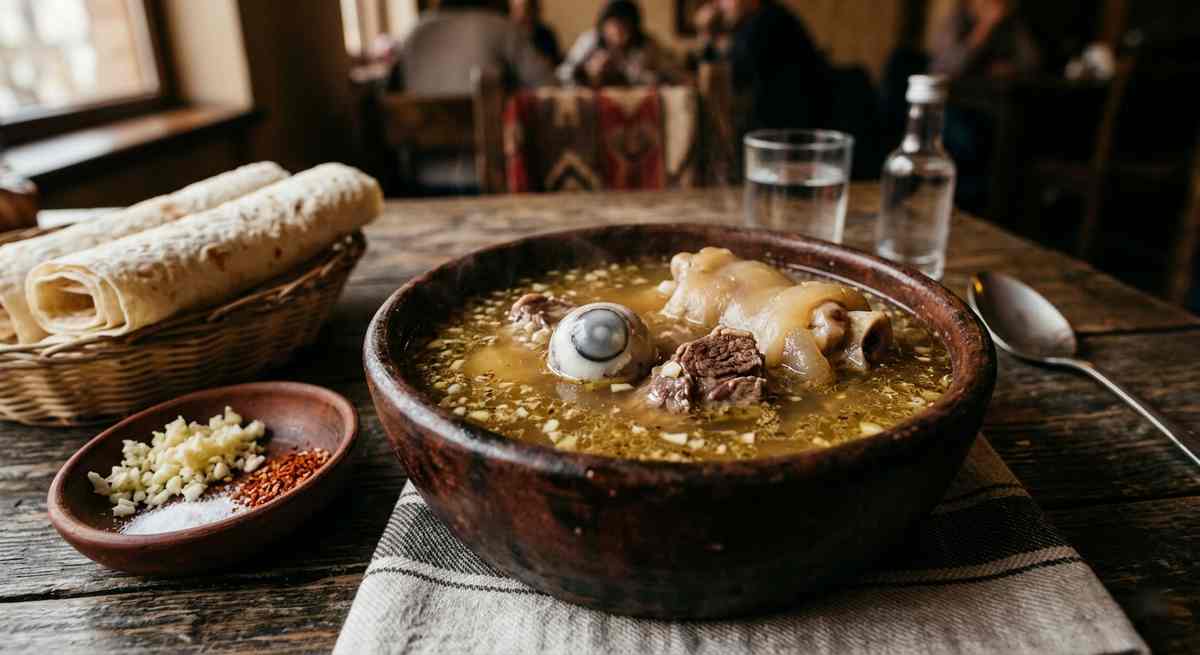
Sheep eyeball in traditional khash broth — a Middle Eastern delicacy served with sheep cheek meat and trotters.
In the world of extreme eating, few foods test your courage like the sheep eyeball. Many cultures practice nose-to-tail eating. But a whole cooked eye staring back from your plate? That’s a big challenge. This isn’t just food — it’s a dare and a rite of passage. For many people in the Middle East, it’s also a cherished part of their food heritage.
You’ll rarely find sheep eyeballs as a standalone dish. Instead, you’ll encounter them as part of Khash (in Armenia, Georgia, and the Caucasus) or Kalleh Pacheh (in Iran, Turkey, and Iraq). These are slow-cooked soups made from sheep’s head, feet, and offal.
In traditional settings, people consider the sheep eyeball a delicacy. Moreover, they often offer it to the most honored guest as a sign of respect. Therefore, if someone offers you an eyeball, it’s a compliment. The best time to try it is in winter (November to March), early in the morning (4am to 10am).
For those interested in other Middle Eastern offal dishes, try khash (sheep head soup) or lamb brain (mokh).
Want to learn more about Middle Eastern offal cuisine? Read National Geographic’s article on offal traditions or explore BBC’s feature on khash.
Key Insight: Most people who try it say the taste isn’t the problem — it’s the texture and mental association. The flavor is mild, creamy, and slightly metallic, soaking up the savory broth.
Where to Eat Sheep Eyeballs
Iran (Tehran): Visit Kalleh Pacheh Haj Reza or Moshiri. They serve it only in the early morning. Price: 200,000-400,000 IRR.
Armenia (Yerevan): Try Khinga Khash or Khnko Aper Khash. Price: 5,000-10,000 AMD. Best on winter weekends.
Turkey (Istanbul): Go to Kelle Pacha Ocakbaşı or Fatih Kelleci. Price: 100-300 TRY.
You can also find sheep eyeballs in Georgia (Tbilisi), Azerbaijan (Baku), and Iraq (Baghdad, Erbil). Average price per serving: $3-8 USD.
For other extreme offal adventures, try Rocky Mountain oysters (USA).
What Does a Sheep Eyeball Look and Taste Like?
The eyeball is about the size of a large marble. It has a white sclera (the white part) and an opaque, cloudy grey cornea. The texture is firm and rubbery on the outside. Inside, there’s a warm fluid-filled center that “pops” when you bite it. The taste is mild, creamy, and slightly metallic — it absorbs the flavor of the broth.
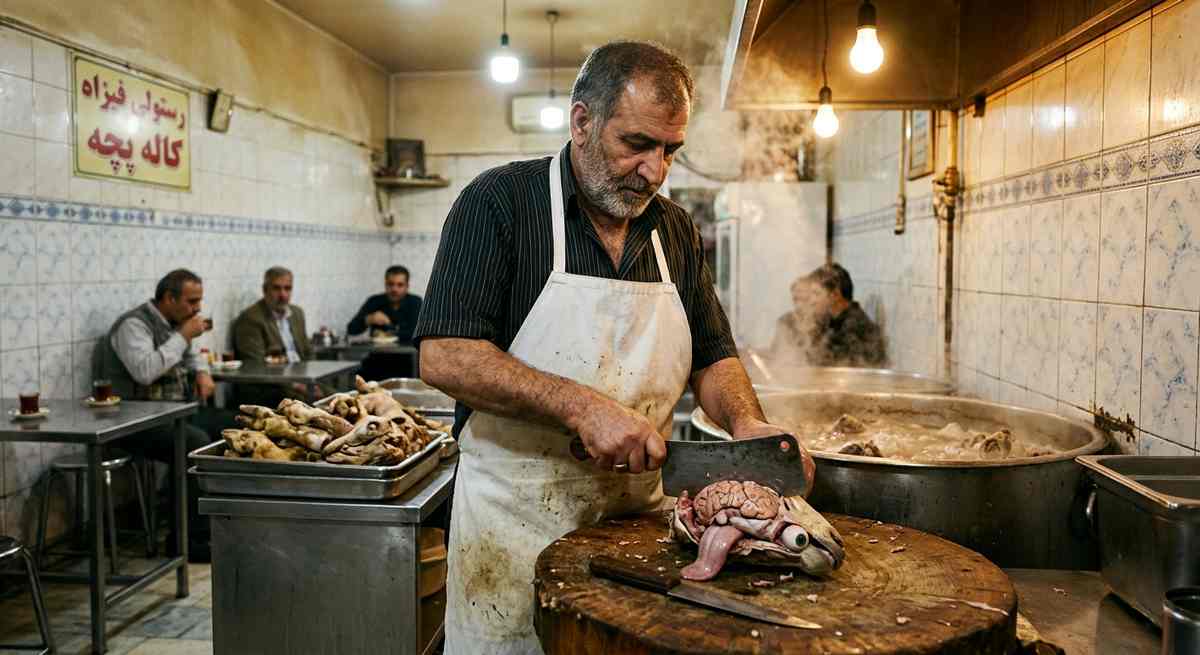
Khash breakfast — sheep eyeball served with garlic, radishes, dried lavash, and vodka.
First-Timer’s Guide to Eating Sheep Eyeballs
Step 1: Accept with confidence. In traditional settings, being offered an eyeball is an honor. So don’t refuse it.
Step 2: Use the recommended method. Pop the whole thing in your mouth. Then bite down quickly to get through the initial “pop.” Finally, swallow promptly. Chewing extensively just prolongs the textural experience.
Step 3: Pair it with accompaniments. For example, eat it with garlic (which cuts the richness). Or drink vodka or raki (traditional pairing that aids digestion). Pickled vegetables add acidity, and lavash bread soaks up the broth.
More tips for first-timers: Go with a local guide. Visit in winter. Come hungry — these are hearty, heavy meals. Most importantly, don’t overthink it. The build-up is much worse than the experience itself.
In some folk medicine traditions, people believe eating eyeballs benefits your eyesight (“like supports like”). However, there’s no scientific evidence for this.
For more information on offal and food safety, check out WHO’s food safety guidelines.
Key Takeaways:
• Sheep eyeballs appear in khash (Armenia) and kalleh pacheh (Iran, Turkey)
• People offer them to honored guests as a sign of respect in traditional settings
• Taste: mild, creamy, slightly metallic — absorbs broth flavor, not fishy
• Texture: firm rubbery exterior with warm fluid center that “pops”
• Best time: winter (November–March), early morning (4am-10am)
• Price: $3-8 USD per serving
• Eating method: pop whole, bite quickly to burst, swallow promptly
Ready to Face the Eyeball Challenge?
Follow EatSleepPush for more extreme food guides from around the world.