
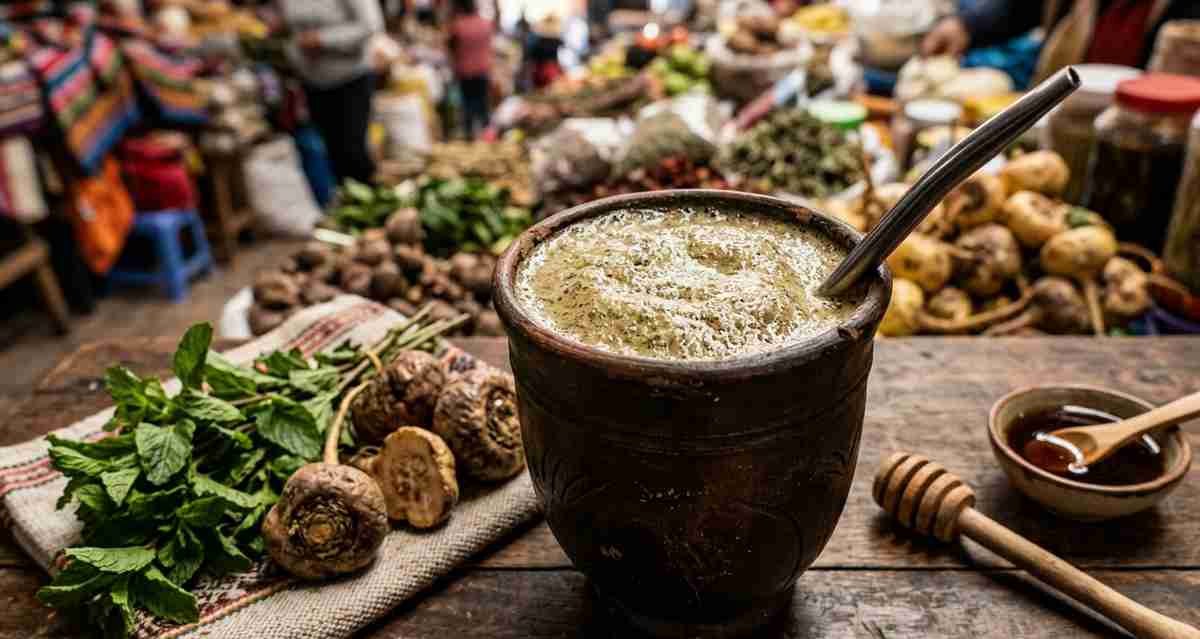
In the highlands of Peru, locals drink something truly extreme. They call it frog juice or “jugo de rana” in Spanish. This is not your average morning smoothie. Makers blend live frogs with honey, herbs, and sometimes maca root. Many locals believe this drink boosts energy, fights fatigue, and works as an aphrodisiac. For adventurous eaters, frog juice remains one of South America’s most shocking traditional remedies.
Frog juice is very popular in Peru, especially in the Andean regions around Cusco and Arequipa. Locals have drunk this natural medicine for many years. Makers use a specific frog called the Telmatobius culeus, also known as the Lake Titicaca frog. This frog is one of the largest aquatic frogs in the world. However, it is now an endangered species.
For those interested in other extreme traditional drinks, try snake wine from Vietnam or baby mouse wine from China & Korea.
Want to learn more about Peruvian traditional medicine? Read National Geographic’s article on Andean remedies or explore BBC’s feature on Peru’s frog juice.
Key Insight: No scientific evidence proves that frog juice offers any health benefits. Health experts warn people not to drink it due to risks of bacteria, parasites, and toxins.
How Frog Juice Is Made
Here is the step-by-step process:
- Step 1: First, the maker catches a live frog, usually the Lake Titicaca frog.
- Step 2: Then, they place the frog into a blender alive. Some people remove the skin first, but others blend the whole frog.
- Step 3: Next, they add other ingredients like honey, maca root, and sometimes aloe vera or herbs.
- Step 4: After that, they blend everything into a smooth, thick liquid. The drink turns greenish-brown and has a frothy texture.
- Step 5: Finally, they serve the drink immediately in a clay cup. Some vendors add cinnamon or other spices on top.
For other extreme traditional remedies, explore baby mouse wine or shiokara from Japan.
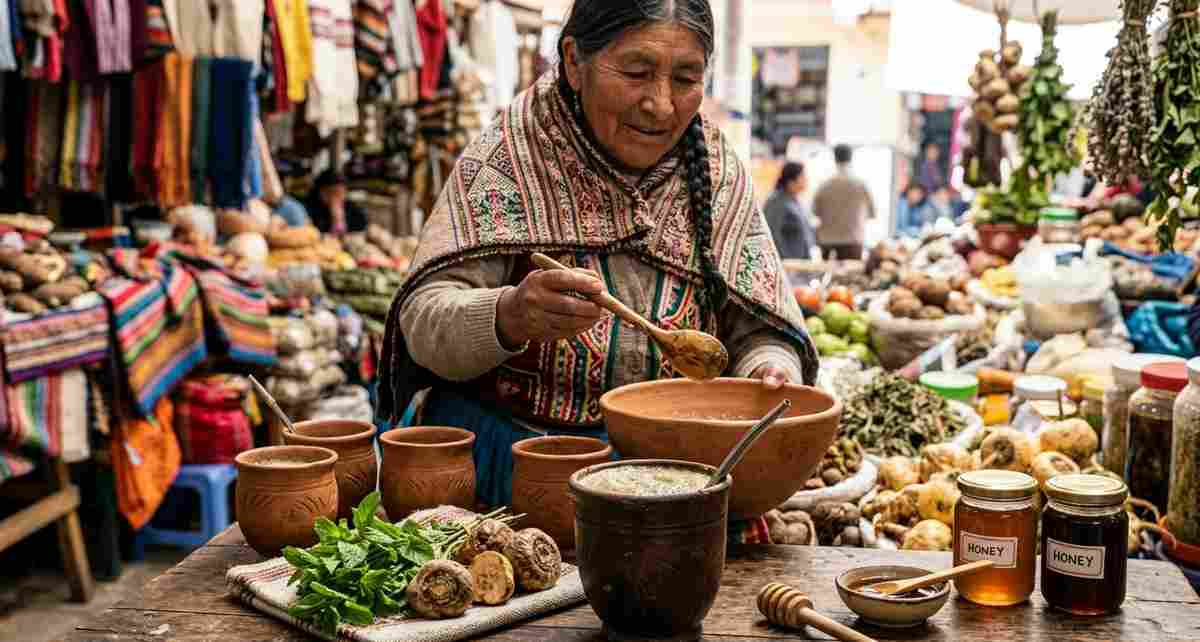
— ingredients used to prepare frog juice and other herbal remedies.
Why Do People Drink Frog Juice?
In Peruvian folk medicine, people believe frog juice offers many health benefits. For example, supporters claim it can:
- Boost energy and fight fatigue
- Improve sexual performance and libido (as an aphrodisiac)
- Help with asthma and breathing problems
- Strengthen bones and joints
- Treat anemia and low blood count
- Speed up recovery from illness
- Improve memory and brain function
Some vendors call this drink “natural Viagra.” Others say it helps children grow stronger. However, modern medical research does not support any of these claims.
Is Frog Juice Safe to Drink?
Health experts strongly warn against drinking frog juice. Here are the main risks:
- Bacterial infection: Frogs can carry Salmonella and other harmful bacteria. Blending does not kill them.
- Parasites: Frogs may contain parasites that cause serious illness in humans.
- Endangered species: The Lake Titicaca frog is critically endangered. Drinking frog juice harms this species.
- Toxins: Some frogs produce skin toxins that can be dangerous if consumed.
- No scientific proof: Studies show zero medical benefits. The “energy boost” likely comes from sugar in honey and caffeine in herbs.
Medical Warning: The World Health Organization (WHO) and CDC do not recognize frog juice as a safe or effective treatment. Do not drink this product. Always seek professional medical advice for any health condition.
Where to Find Frog Juice in Peru
Lima (Peru’s capital): Some traditional markets in Lima sell frog juice, especially in the La Victoria district. However, it is becoming less common.
Cusco: In the San Pedro Market, you may find vendors selling frog juice. This market sits near the famous tourist area of Cusco.
Arequipa: Some traditional medicine markets in Arequipa still offer this drink. Locals may drink it early in the morning for energy.
Important note: The Peruvian government has banned the use of endangered frog species for commercial purposes. Some vendors now use farmed frogs or other alternatives. However, illegal harvesting still occurs.
Our advice: Do not seek out or drink frog juice. It is unsafe, and it harms endangered animals. Instead, try other traditional Peruvian drinks that are safe and delicious, like chicha morada (purple corn drink) or maca smoothies.
For other traditional South American remedies, read about escamoles from Mexico or chicha de jora from Peru.
For scientific information on food safety and traditional remedies, check out WHO’s food safety guidelines.
Key Takeaways:
• Frog juice is a Peruvian smoothie made from blended live frogs, honey, and herbs
• People use it in traditional medicine to boost energy, stamina, and libido
• No scientific evidence supports any health benefits
• Serious health risks include bacteria, parasites, and toxins
• The Lake Titicaca frog used is critically endangered
• You can find it in traditional markets in Lima, Cusco, and Arequipa
• Medical experts strongly warn against drinking it
Ready to learn about more extreme traditional remedies?
Follow EatSleepPush for more extreme food and drink guides from around the world.